We made it to the end of January! One month into 2026, and it feels like a lot has changed. Let’s go through the top changes in the industry this month and how they have affected SEO.
Year-on-year SEO Traffic, Where Do We Stand?
One of the most speculated topics in the community is the drop in organic search traffic due to generative AI tools. However, Graphite partnering with SimilarWeb gave us the stats that are telling us a much different story from what was predicted.
Year-on-year SEO traffic is only down 2.5%, and in fact, traffic has increased slightly in 2025, by 1.2%. These figures debunk the rumour of massive drops in traffic, meaning LLMs may not be causing major SEO decline as we thought.
AI Changes
AI changes how we approach SEO every day. Let’s review some of the key changes January had to offer.
Chat GPT Introduces Ads
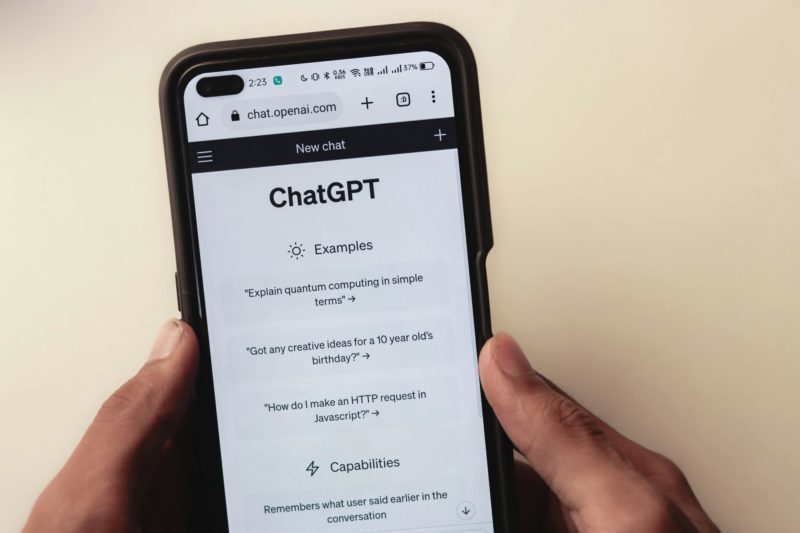
OpenAI is preparing to introduce Ads into ChatGPT in the U.S. This is currently being tested with a few select advertisers and is planned to be charged on a pay-per-impression basis. It has been stressed that this will be a user-first initiative, allowing users to dismiss the Ads, turn off their personalisation, and clear ad-related data at any time.
How Will This Look?
OpenAI has said ads will be clearly labelled at the bottom of a response, but will not appear near sensitive topics, such as health, mental health, and politics.
Similarly, only those with specific plans and over 18 will see Ads; logged-in adult users on the free tier, and users on ChatGPT Go.
Gemini 3 Flash Introduced to AI Mode
Not too long ago, Google introduced Gemini 3 to AI mode, and we’re already seeing upgrades. Gemini 3 Flash, as its name suggests, is built for speed. Combined with strong reasoning performance and multimodal capabilities, AI mode becomes a much more powerful tool.
Gemini 3 Flash goes further than simply being faster; it can modulate just how long it thinks for when processing at the highest level. For example, thinking longer for more complex searches.
AI Hallucinations: How To Prevent Them
I’m sure we are all familiar with our AI prompts giving us inconsistent results, sometimes looking like they were plucked from thin air. This has always been seen as a fault or malfunction with the LLM; however, the issue may actually lie in the prompt used.
Proactivity is key. Expect AI to make mistakes by outlining your request to the T. Uncertainty is not a stopping point for AI tools, as remaining fluent is their priority.
What Is The Rubric Method?
The rubric method involves outlining clear boundaries, priorities, and, most importantly, what to do when the criteria can’t be met.
However, long or complex prompts may lead to conflicting goals; for example, one requiring accuracy and speed may result in inaccurate answers as no prioritisation has been clarified.
Rubrics provide AI with clear boundaries for what is required, optional, and unacceptable, resulting in less inference.
Tips For Writing Your Rubric
Toby Bartlett from Search Engine Land outlines the following criteria to be included for a well-written rubric:
- Accuracy requirements
- Source expectations
- Uncertainty handling
- Confidence/tone constraints
- Failure behaviour
The Rise Of GEO
GEO (Generative Engine Optimisation) is the process of optimising your content to boost its visibility in AI-driven search. The most important question in GEO is “How do you get mentioned or cited when an AI is constructing the answer?”

GEO vs SEO
As we know, traditional SEO is all about climbing rankings via backlink implementation, page speed, engagement, etc. GEO has different factors that contribute to a well-performing website. Search Engine Land outlines these as follows:
- Entity clarity instead of keyword targeting
- Semantic depth instead of focusing on production volume to maximise the number of topics addressed
- Topical embeddings instead of linear ranking
- Citation-worthiness instead of link velocity
- Source reliability weighting instead of raw backlink authority
These factors in SEO aren’t new concepts; they just need to be considered more now, given the growth of LLMs and AI-Generated answers.
Read our full blog on GEO vs SEO
Key Dates For Your Marketing Diary
As well as being National Cancer Prevention Month, there are many other social themes to spread awareness for:
- 6th Feb 2026 – Time to talk day
- 11th Feb 2026 – International Day of Women & Girls in Science
- 14th Feb 2026 – Valentine’s Day
- 17th Feb 2026 – Chinese New Year
- 17th Feb 2026 – Pancake Day
Stay Up To Date With Wildcat Digital
Looking to help your business punch above its weight online? Our dedicated and expert team is here to help you and your business get your foot in the door of SEO and PPC. Arrange a free consultation today.
Take a look at our recent Digital Marketing Roundups below:

Paul Pennington
SEO Account Director