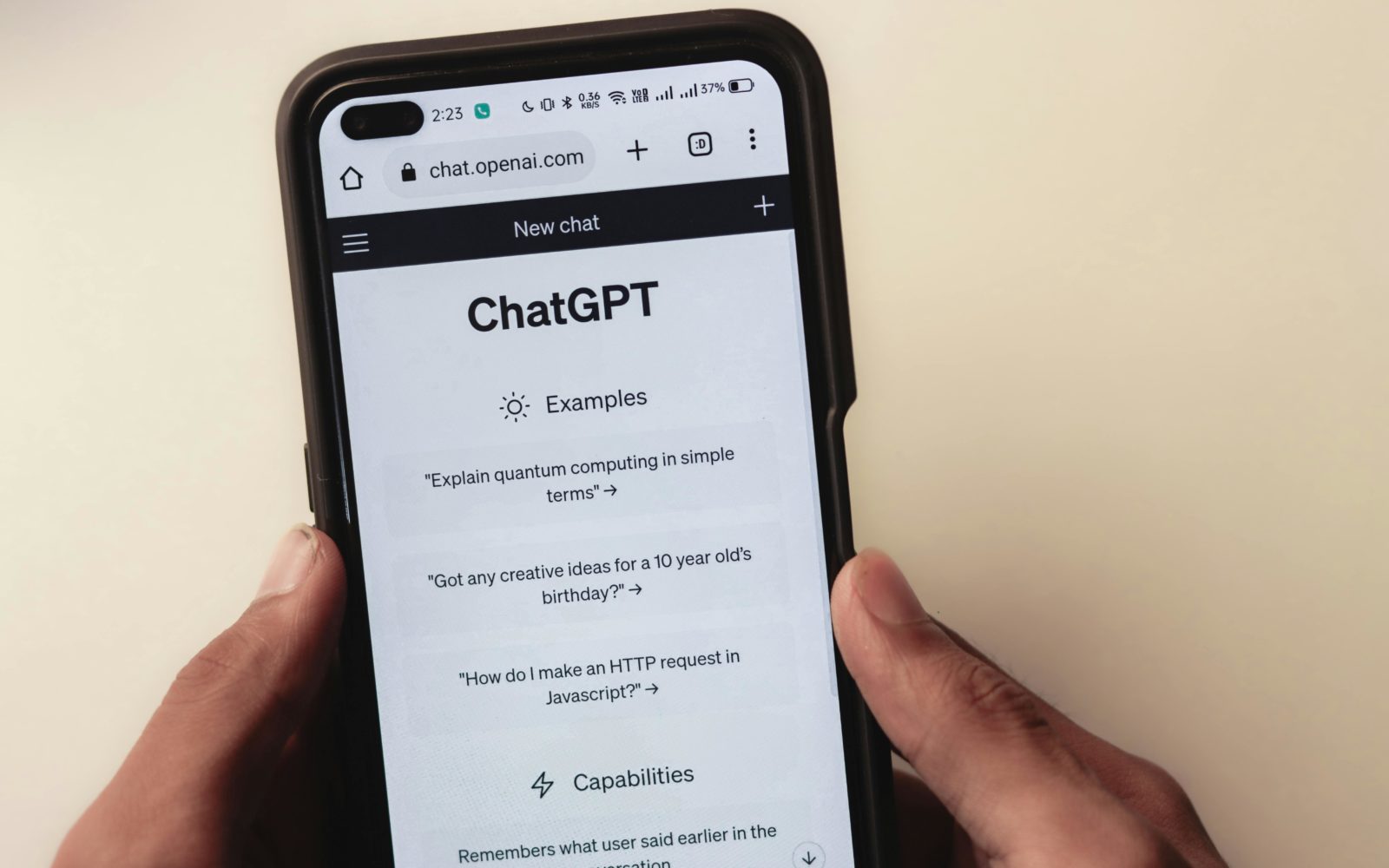
In just the last few years, the way that people discover information online has shifted – and it’s set to change even more as large language models (LLMs) reshape search behaviour and tools like Google’s AI Overviews and AI Mode. During this rapid shift, traditional SEO metrics like rankings and clicks can no longer tell the full story of how you’re performing online. So, how do you measure SEO success in the age of LLMs?
To measure SEO success in the LLM era, track visibility across AI-driven results, brand mentions and citations, and engagement quality – not just clicks or rankings. Blend Google Search Console (GSC), Google Analytics (GA4), and brand monitoring tools to assess your influence across both traditional and AI-powered search.
Read on to find out how to track, analyse, and prove SEO performance in an AI-driven search landscape.
Why Are Traditional SEO Metrics Less Reliable in the LLM Era?
Features like Google’s AI Overviews and other generative-AI search tools mean that users often get their answers before they even click on to a website. You might still appear or be cited as a reference, but that visibility isn’t reflected in clicks or rankings.
In other words, the search experience has become multi-layered: LLMs aggregate, summarise, and attribute content, creating new forms of influence beyond traditional SERPs. Because of this, success can no longer solely be judged by traffic or position – you’ll need to take a broader, brand-centric perspective.
For more information about how brand affects AI results, read our guide on the role of brand in LLM driven search.
What New Metrics Should You Track for SEO in the LLM Era?
To reflect the new SEO environment, you’ll need to expand beyond traditional keyword and traffic tracking. Below are the key metrics to include in your modern SEO dashboard.
1. Why Track Visibility and Impressions in AI-Driven Results?
You should monitor how often your site appears in AI Overviews or conversational results like ChatGPT or Gemini. Even without a click, appearing as a cited source signals authority and relevance – and provides brand awareness as an authoritative source within your niche.
2. Why Are Brand Queries and Mentions More Important Than Ever?
Brand searches and unlinked mentions indicate that users recognise and seek out your business – even if they first saw it in an AI-generated response. Tracking these increases in branded searches acts as a proxy for understanding your users’ awareness.
3. How Do Citations Reflect Your Authority?
Citations and mentions in LLM results show that your content is being used by AI or referenced consistently across the web. These are strong signals of topical authority, relevance, and content reliability.
4. Which Engagement Signals Matter Most?
Traditional metrics like bounce rate and engagement time still matter, but you should be separating users that click through from LLMs in your analytics to gain a broader understanding of how they perform.
Are users clicking through from AI summaries? Do they engage deeply after visiting your site? Are these users more or less likely to convert?
Just as with traditional SEO, different businesses will have different needs. A tech service business is more likely to see higher engagement from AI clicks compared to a supermarket due to the demographic and expertise of their customers. Evaluate where your business benefits from the most and adjust your strategy accordingly.
5. How Should You Measure Traffic Quality and Conversions?
With most sites experiencing fewer organic clicks, focus on the quality of sessions. This includes conversion rate, lead volume, and engagement. Evaluate whether AI driven traffic converts at higher rates than generic organic search.
6. Why Track Long-Tail and Prompt-Style Queries?
LLMs often interpret conversational queries such as “how do I…”, “compare X vs Y”. You should be monitoring how your content performs for these long-tail questions to understand where it’s being pulled into AI responses.

What Tools and Methods Can Help Track LLM Performance?
There are a variety of tools and techniques that you can use to track your LLM success. These range from traditional SEO tools that you’ve already been using to new tools that have popped up following the AI boom.
Unfortunately, Google hasn’t been much help so far in regards to AI Overviews, so you’ll have to rely on more manual methods or third party tools until Google releases a way to track clicks and impressions in AI Overviews separately.
Google Search Console
Use GSC to monitor impressions and positions for key queries. Rising impressions without matching clicks may indicate AI Overview appearances. Many of our clients saw a large increase in impressions over the last year that was independent from clicks, which we’ve found to be from being seen in AI Overviews without being clicked on.
You can also filter for branded queries to measure recognition growth.
*Note: Pay attention to other changes made by Google. For example, a recent change that stopped keyword tracking tools using the num=100 parameter meant that all sites saw a massive drop in impressions, despite this drop being from software, not users.
Google Analytics
Segment traffic in GA4 by organic, direct, and branded search. Track conversions by channel, compare behaviour patterns, and measure engagement depth. Use custom events to assess content consumption.
How to Track if Your Brand Is Mentioned in LLM Results
Tools like Brand24, Mention, or Semrush Brand Monitoring can track when your business appears in Q&A forums, social discussions, or AI-referenced articles. Analyse both linked and unlinked mentions for influence signals.
Are There Specific LLM Tracking Methods?
Track your brand’s presence in AI-generated search features like AI Overviews or ChatGPT. Compare metrics before and after AI feature rollouts to identify shifts in visibility and engagement.
Why Combine Multiple Data Sources?
By combining data from GSC, Analytics, and Brand Monitoring, you can connect impressions, mentions, and conversions for a complete view of performance. Build dashboards to visualise influence across search types.
What Can We Learn From Wildcat’s Experience?
When Google rolled out AI Overviews, Wildcat noticed that our own organic impressions started to increase as it appeared for more and more AI Overview results – going from 515K impressions across June and July 2024 to a whopping 3.5 million impressions during the same period in 2025.
Due to the click-through-rate changes that we’ve discussed in this guide, we only saw 300 more clicks onto the site despite this massive increase in impressions. However, lead generation and quality from the site has drastically increased. This supports the theory that the lower click numbers are still providing more business value through more qualified users.
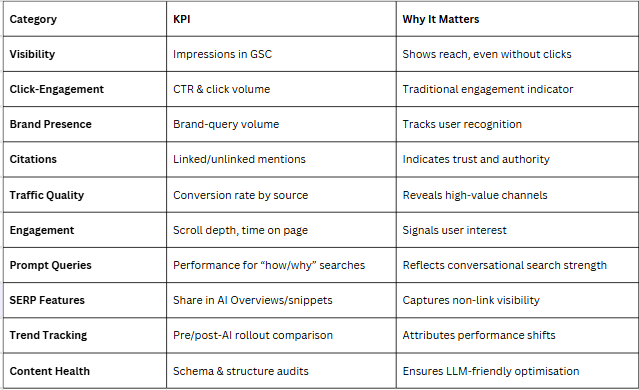
What KPIs Should You Be Looking At For LLM Performance?
Bonus Tips:
- Build custom GA4 dashboards to compare traditional SEO vs brand query traffic.
- Try tagging brand-related campaigns with UTMs to track conversion paths.
- Audit content regularly to optimise for clarity and structured data. Read our guide on creating LLM friendly content to find out more.
- Communicate to stakeholders/clients that lower clicks don’t always mean reduced cash – feel free to use our case study as an example!
Future-Proof SEO Measurement With Wildcat Digital
In a world where LLMs and AI are rewriting the rules of SEO, success depends on how quickly you can adapt and go beyond traditional metrics. Wildcat helps you combine LLM visibility tracking, brand-mention monitoring, and engagement analytics to show the real impact of your SEO.
Our team can help you audit your current LLM tracking setup and identify what you could be missing, build dashboards that integrate available AI data, track mentions and brand queries, and redefine your KPIs for the new SEO landscape.
Get in touch with our team to discuss how we can help you understand your AI performance today!

Jamie Stowe
Senior SEO Account Manager