January has been a busy month in the world of SEO. With the rollout of 2 Google Algorithm updates reported across December, January has been a bit of a scramble for SEOs worldwide as we attempt to realign our campaigns with the updated ranking factors issued by one of the web’s largest players.
That said, in the ever-changing world of digital marketing, SEO professionals are hardwired to deal with changes of circumstance. So we thought that we would share with you some of our recent findings of digital marketing, ranking factors, as well as some top tips from one of the UK’s leading digital marketing agencies for 2025.

Two Core Algorithm Updates Across December
As we reported last month in our Monthly Roundup, Google finalised the rollout of 2 new Algorithm Updates by the 19th of December. Now that the waves have settled, let’s take a look at each to determine how each update may have affected your rankings.
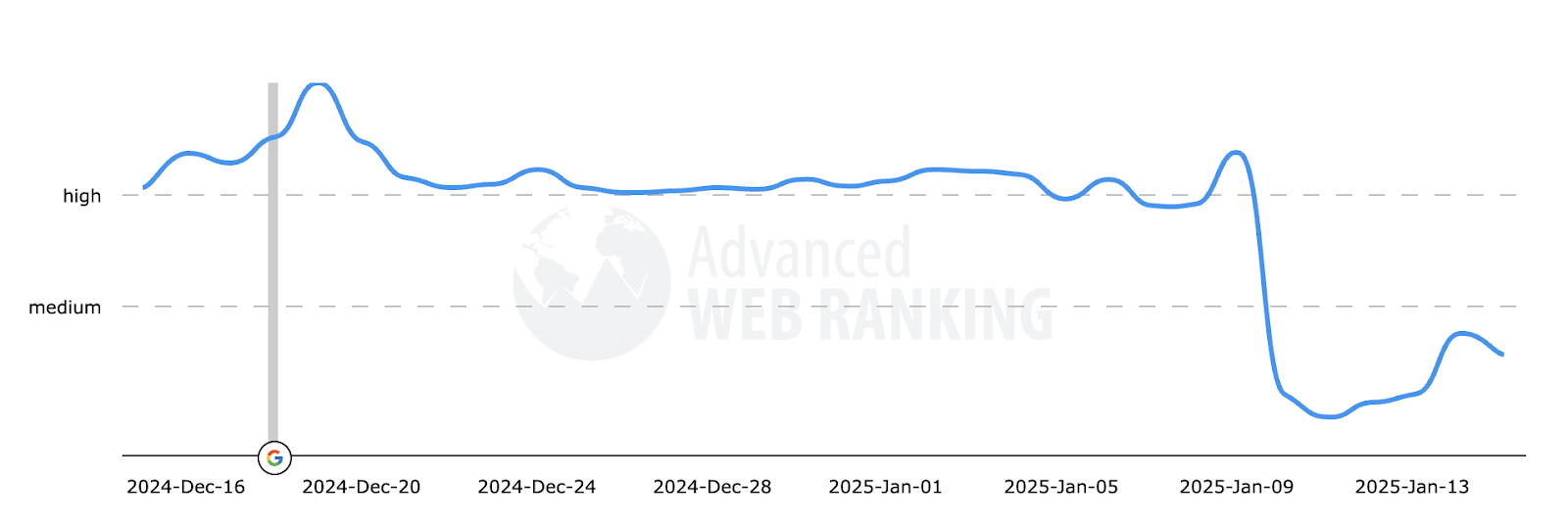
Google’s December Core Algorithm Update (12th until the 18th)
This Core Algorithm Update was a change to how Google ranks all websites within their search engine results pages. You can review your own performance on your Google Search Console or GA4 properties, and see if your rankings (and likely traffic or other KPIs) dropped on, between or since these dates.
It’s not always clear if your business, industry or niche has been affected, and Google isn’t in the business of letting every website within their index know if they have been affected. However, if you compare like-for-like dates last year, you may be able to see if you have been hit by less-favourable rankings due to Google’s new yardstick.
If you have noticed a non-seasonal dip, then it may be worth speaking with your SEO or marketing team to help make improvements to your website or get an SEO team on board to help you compete under these new terms.
Most often, gains and losses will be dealt to most websites, so you may be able to group your worsened URLs and narrow down your search into why you have lost positions across certain campaigns, folders or URLs associated with your marketing efforts.
Google’s December Spam Update (19th until the 26th)
After updating the Core Algorithm, Google updated its automated spam filter. This update allowed Google to better detect spam within its search engines, slightly changing the results for its search pages.
This update will have gone unnoticed by most businesses, and potentially improve rankings slightly. You likely will have been following good practices up to this point, and may only notice an improvement if spammy sites have been removed from more preferable positions.
To review the effects of this update, simply review your site through GA4, Search Console or other analytics software around the dates above. If there wasn’t a noticeable change outside of seasonal changes often noticed across the late December period, then this update likely hasn’t affected you.
If you have noticed a change in your results outside of seasonal differences, then you may need to review your content and linking against Google’s Spam Policy, speak with your SEO team, or hire a digital marketing agency to help you diagnose this effect and build a strategy to help you restore your rankings.

Google Blocks Javascript from Scrapers and SEO Tools
Reported on the morning of January 20th (during my second coffee of the morning), Google announced that they would be requiring Javascript to block scrapers and bots from many SEO tools.
This information has since been confirmed by SEJ and other sources.
In short, Google implemented a new version of their search tool at the beginning of January, and this requires Javascript to be enabled. Google is running Javascript on their search page and functions, whilst also limiting your browser in doing the same thing. Looking closer, it appears that this new script limits the amount of requests made to a page or document. This is called Rate Limiting. and this has a knock-on effect on extension tools such as Conductor and MozBar.
Worryingly, these tools help us do our jobs every day, and it is unclear at present why Google would limit the use of such tools, whilst also making their search tools bulky and more demanding on their own resources.
It’s no secret that Google’s search function (and subsequently, the Ads that we view) are the main breadwinner for Alphabet. It seems that Google is trying to protect this feature with the blocking of scrapers from potentially replicating its hard work, at least at this early stage.
The Return of Google Tag Assistant
Google recently relaunched its infamous Tag Assistant browser extension. Favourited by busy SEOs, this little assistant looked through the code of any webpage and returned any Google technology working away in the background and the tag information concisely within the browser.
This extension was deprecated in 2023, and it was never replaced by the search engine behemoth. However, it has been brought back as of January 2025.
If you haven’t used Tag Assistant, find it here, and install it as an extension to your browser.
Google AI Assistant in Developer Tools
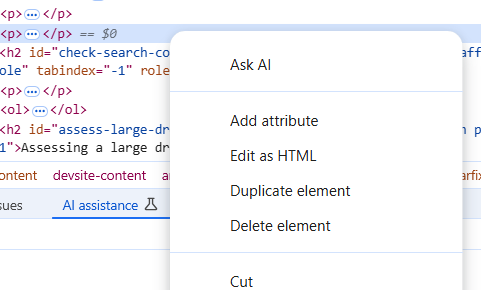
In October, Google unveiled their AI Assistant in Developer Tools. This addition allows Google’s Gemini to help Google Chrome users interpret data within the ‘Inspect’ feature.
Whilst it went over our heads at the time, this little feature allows uncertain web developers, SEOs and those looking to level up their understanding of web pages an insight into the many elements and attributes that build a web page.
To use the AI Assistant, simply right-click on any element of a webpage and select ‘Inspect.’ This will display the underlying HTML and CSS that structure the page. Then, right-click on a specific element within the Inspect panel to reveal an ‘Ask AI’ option.
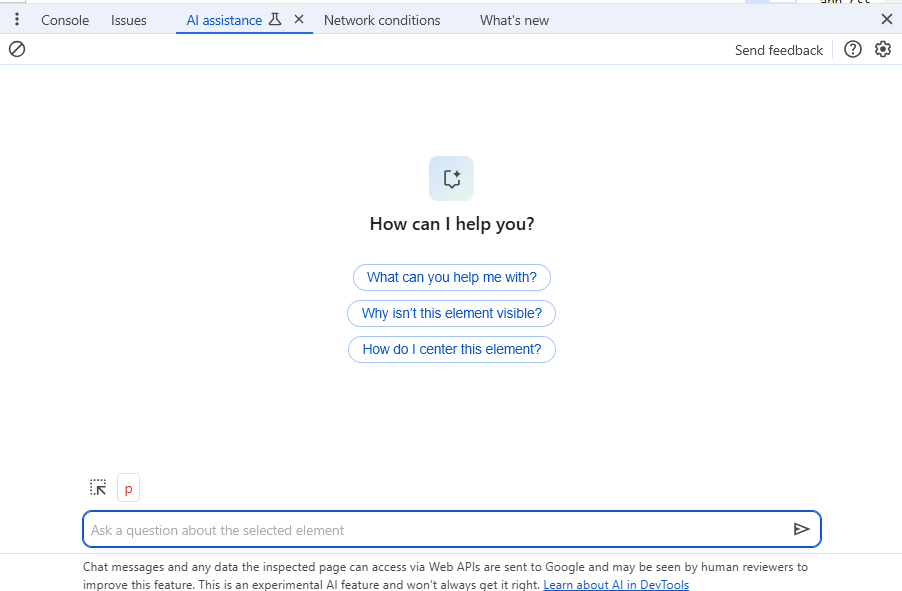
You can ask the AI almost anything, such as explanations of the CSS applied to a particular element, where the element is located within the DOM (Document Object Model), or its dependencies.
Give this functionality a go yourself, and it may help you quickly up-skill your understanding of web pages and web development. For us here at Wildcat, it has helped us better understand the complex websites that we work with every day.
Whilst we weren’t 100% sure about it at the time of release, this little feature allows uncertain web developers, SEOs and those looking to level up their understanding of web pages an insight into the many elements and attributes that build a web page.
To trigger the AI response, simply right-click on any element of a web page, and click ‘Inspect’. From here, you will be shown the elements that build up the webpage. Right-clicking again on any particular element will show the ‘Ask AI’ prompt.
You can ask the AI almost anything that you wish, including insights into the CSS used on this particular element, and even where each element is nestled, or other dependencies.

Top SEO Tools We Have Been Using in January
Detailed SEO Extension
Similar to our much-loved Conductor Chrome SEO Extension, Detailed SEO Extension offers further insight into many of the key areas of a web page that an SEO would typically look at. This includes:
- Title Tags
- Meta Descriptions
- URL and Canonicals
- Robot and X-Robot Tags
- Lang Attributes, Schema and Technologies
WhatFont
The WhatFont Extension allows you to view the font of a web page in-browser. This simple tool is great for those getting to grips with web development and CSS.
Display #Anchors
Struggling to anchor hrefs? The Display #Anchor Extension helps SEOs and Web Developers find all Anchors present on the page within your browser. We find this simple tool to be very handy in some situations, so why not add it to your browser and make <a> links simple?
Key Dates for Digital Marketing in February 2025
Keeping an eye on upcoming global events calendar can help you publish content when there is a spike in interest. As such, we have earmarked to following dates for your calendar to help you publish your content during this peak.
- 29th Jan – 12th Feb – Chinese/Lunar New Year
- 1st – 28th Feb – LGBT History Month
- 3rd – 9th Feb – National Apprenticeship Week
- 4th Feb – World Cancer Day
- 11th Feb – Safer Internet Day
- 14th Feb – Valentine’s Day
- 17th Feb – Random Acts of Kindness Day

Stay Up To Date with Wildcat Digital
Here at Wildcat Digital, we keep our finger on the pulse of SEO, PPC and the wider world of digital marketing.
Help your business grow by staying up to date with the competition. Our team dedicates time each month to upskilling our knowledge on marketing, SEO Tools and search engine news to help our clients maintain their competitive advantage over other players in their niche.
If you want to get your head above the pack, then get in touch with our team today.

Jon Herdman
SEO Executive