
Search intent (also known as user intent) is the goal of the user when they search a query on Google. This may be to make a purchase, find information, or to find a specific website or page. In this blog, we discuss how important search intent is in SEO and whether or not it plays a role in how Google ranks content. So, let’s get started, is search intent a ranking factor?
Search intent is an important ranking factor. You can do everything right in terms of SEO and content optimisation, but if your page does not match the intent of the keyword and therefore the intent of the user, it is unlikely to rank well.
Read on to learn more about search intent and how to optimise your content to suit the different types of intent.
Jump to:
- Is Search Intent a Google Ranking Factor?
- What are the Four Types of Search Intents (With Examples)?
- How Does Google Determine Search Intent?
- How Do You Determine the Intent of a Searcher?
- How to Optimise for Search Intent

Is Search Intent a Google Ranking Factor?
Based on their recent guidelines, some would say that Google is “obsessed” with search intent, making it a key ranking factor. Simply put, if you don’t satisfy the intent of a keyword, you won’t rank for it. Other ranking factors, such as backlinks and high-quality content still matter, but search intent trumps it all.
Your webpage could be incredibly well written, featuring strategic keywords, links, visuals and everything else that you would expect to have a positive impact on SEO rankings. But, if the search intent is wrong, it’s very unlikely that your page will rank highly.
For example, you could publish an incredibly well written blog targeting your chosen keyword, but if the intent of the keyword is transactional, your blog likely will not rank for that keyword as it’s not explicitly selling anything.
In other words, Google wants to rank pages that actually answer the searcher’s query, and with the same intent. We go into more detail about the different types of search intent below, along with some examples to help you understand why they’re so important.
What are the Four Types of Search Intents (With Examples)?
The different types of search intent are informational, navigational, commercial, and transactional. When optimising or creating webpages, the keywords you choose must match the search intent of your user.
Informational
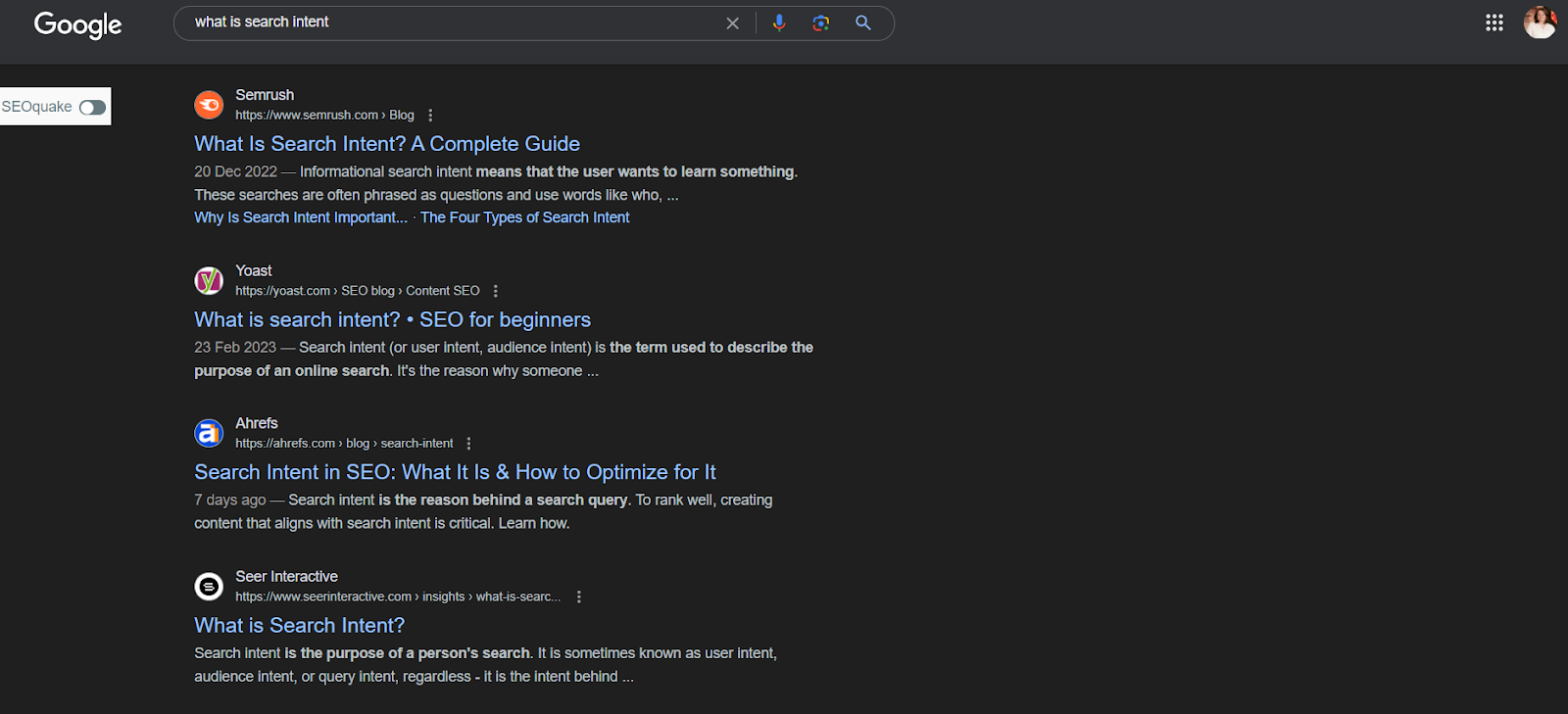
Informational search intent means that people are looking for an answer to a question or query. Often, blogs and other informational pages will rank here. For example, the keyword “What is search intent” has an informational search intent, and the corresponding pages ranking for this keywords are predominantly blogs answering this question

Navigational
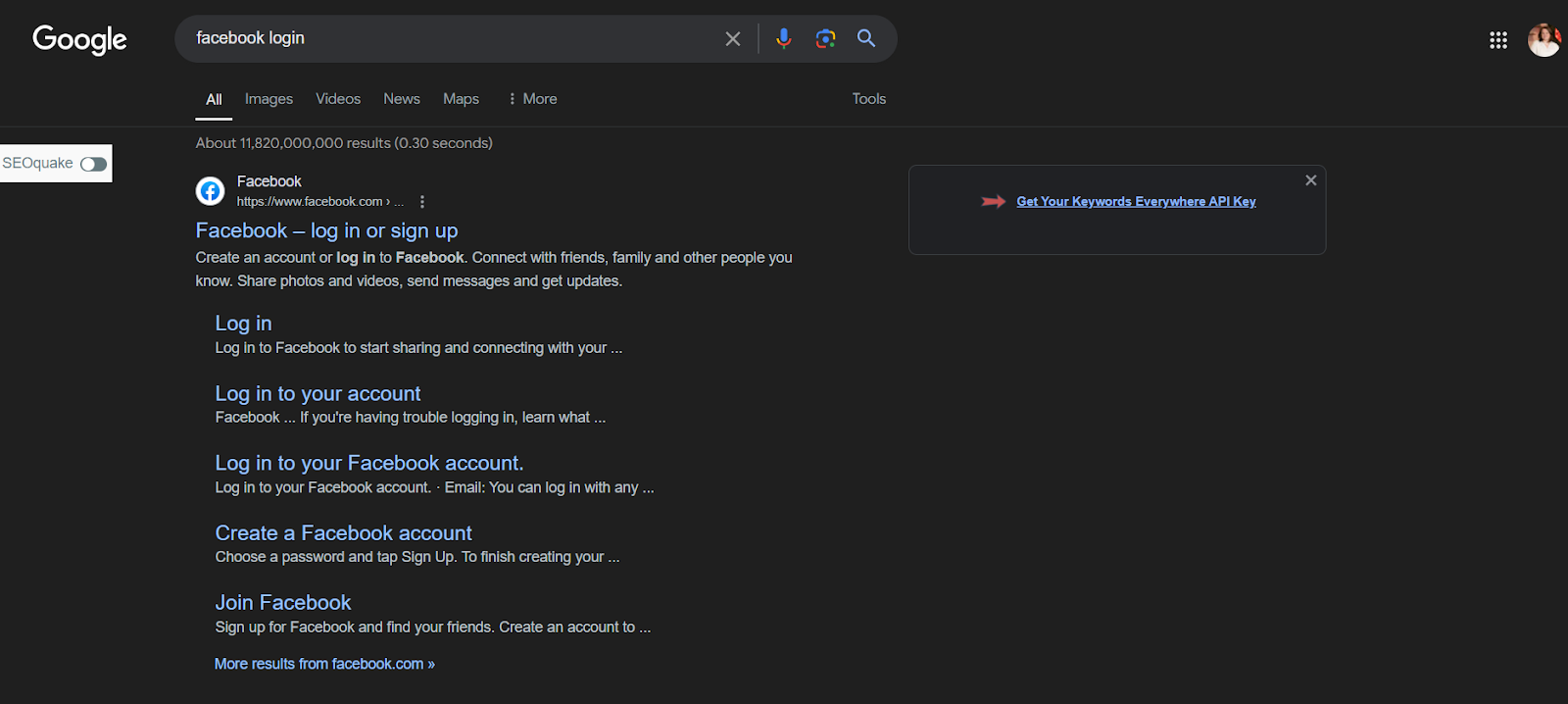
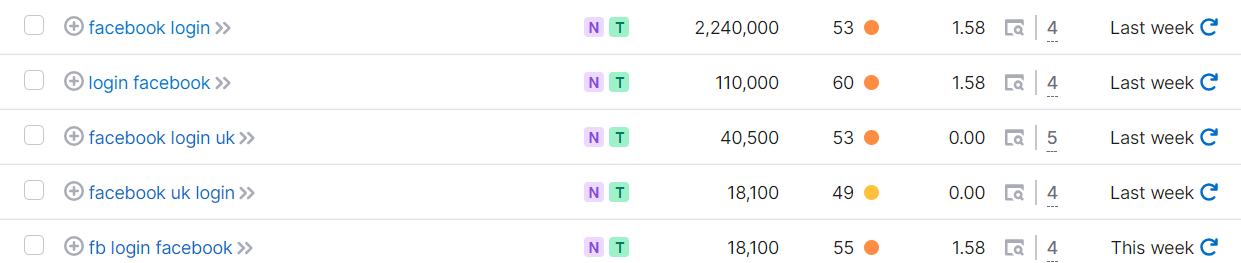
A navigational search intent indicates that a user is looking for a specific website or page. E.g. “Facebook login” – a user searching this term is looking for the login page for Facebook. Therefore this has a navigational intent, and pages that don’t meet this intent will not rank well against it.
Commercial
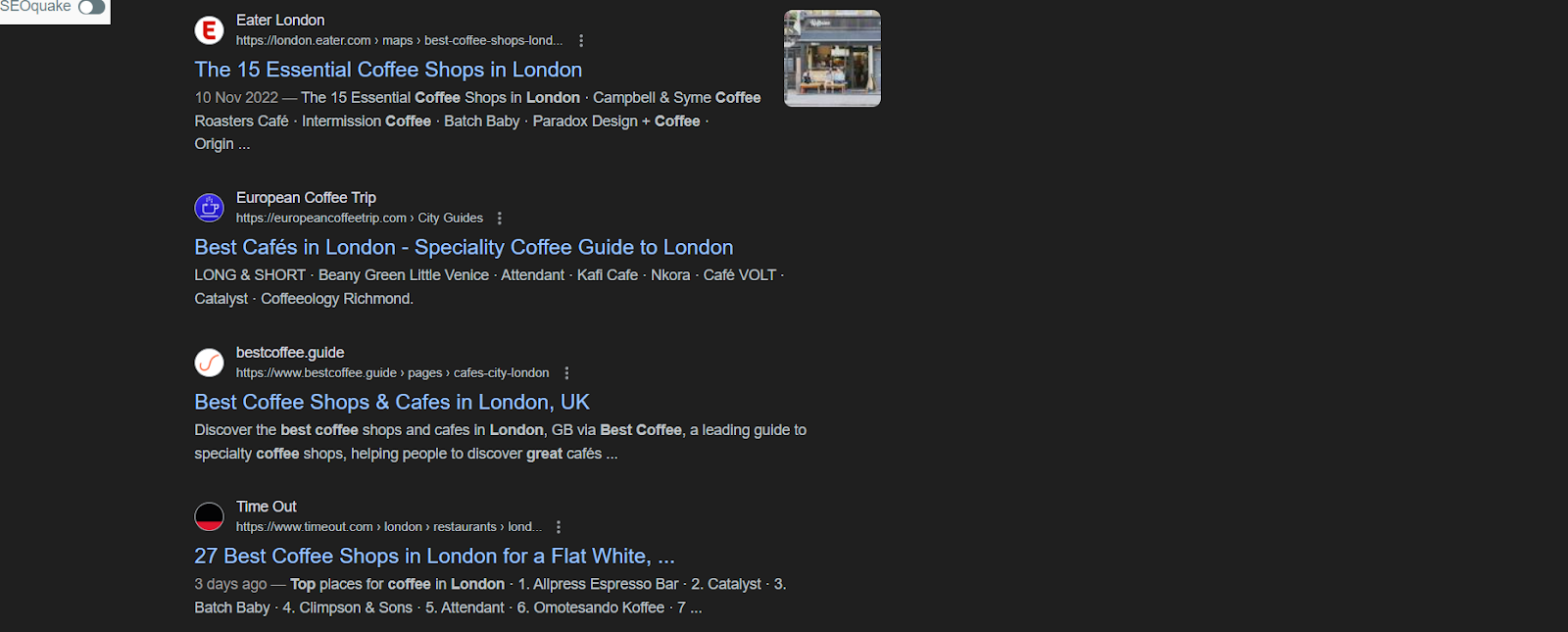
With a commercial search intent, users are looking to investigate brands, services and products. They may be interested in making a purchase or converting, but aren’t yet ready to make the jump to transactional. They’re still exploring their options. For example, “Best coffee UK” (and similar shown below) have a commercial intent as users want to explore their coffee options.

If we take the keyword “Best coffee London UK”, we can see that Google returns a number of list and comparison articles to help users make a decision. This is different from an informational intent, as users require information about specific brands and products.
Transational
A transactional intent is when a user is ready to convert. They want to make a purchase, book an appointment, hire a tradesman etc. An example of this would be “Buy used cars online”. Users are clearly looking to purchase a used car online; their intent is obviously transactional. The pages that rank for this keyword match the intent perfectly.


Learn more about keywords and why they are so important in SEO in our recent blog.
How Does Google Determine Search Intent?
Google developed a language model that deciphers a user’s intent from the words they use. The model looks at the way a query is worded, as well as synonyms of the query to return the most relevant results.
This model also analyses the language used on relevant web pages to ensure a good match is returned – even if the same language is not used. For example, if a user searches “change laptop brightness”, but the relevant website uses the language “adjust laptop brightness”, Google recognises the synonym and intent of the page, and will rank the page for that query.
Similarly, Google uses semantic keywords to better understand what a page is about, thus helping to deliver more relevant search results. So, with our “change laptop brightness” example above, semantic keywords might include:
- Laptop settings
- Laptop
- Computer
- Open laptop settings
- Laptop brightness
- Laptop light
How Do You Determine the Intent of a Searcher?
The only way to determine the search intent of a user is to determine the intent of a keyword. The best way to do this is by using a keyword research tool like SEMrush or Ahrefs.
When you search for relevant keywords on these tools, they also provide you with their best guess at the search intent of any given keyword. These results aren’t always 100% accurate, however, so it’s best to also do a quick manual search to confirm. Simply search the keyword you have chosen in Google and determine for yourself what the intent of that keyword is.
Despite not being 100% accurate, the tools are still useful for determining search intent en mass. If you’re doing research for more than one page, or perhaps at the start of a new campaign, the search intent will guide you in the right direction before making your final choices, at which point you should check the intent manually.

How to Optimise for Search Intent
When you’re ready to begin optimising content, keep in mind what your users are actually looking for. Review your chosen keywords again, and keep in mind the intent of those keywords.
- Informational – users want an answer. Blogs are a great way to match an informational intent. If you are using an informational keyword on a landing page, simply ensure that the page delivers the information that the user is looking for in detail.
- Navigational – users want a specific website or page. Ensure that your page is optimised for your chosen keywords (without keyword stuffing). Ensure that navigation from your landing page is simple and easy to use.
- Commercial – users want to explore their options. List and comparison blogs are a great way to match a commercial content.
- Transactional – users want to convert. Ensure your page(es) is optimised for conversions. Make it as easy as possible for users to convert.
Other Things to Consider
When optimising for search intent, you should consider the Three Cs and ensure that your content is aligned with what currently ranks. They are:
- Content type – is the content a blog, landing page, category page, product page etc.
- Content format – is the content formatted as a guide, a list, a comparison, an opinion, a review etc.
- Content angle – what angle is it coming from? What is the focus? This could be a year, a country or who it is aimed at (e.g. for men/ for women).

Get Tailored Content SEO Advice from Wildcat Digital
If you’re looking for tailored advice on selecting the right keywords for your website, get in touch today to arrange a free consultation and see how our expert SEO and content teams can help you punch above your weight online.

Chloe Robinson
Content Strategist & Team Leader