May has probably been the biggest month for search we’ve seen in years.
Google held its annual I/O developer conference, announced what it called the biggest upgrade to Search in over 25 years, and then launched a core update the very next day. Google Marketing Live followed with major changes to paid search and shopping campaigns, while Meta quietly rolled out several meaningful AI and audience updates in the background.
A lot of the conversation online has focused on the headlines around AI. The more important part for businesses is understanding what these changes actually mean for visibility, traffic and lead generation moving forward.
This roundup covers the key updates from May, what they mean in practice and what businesses should actually be paying attention to.
Google I/O 2026: Search Is Changing Fast
Google I/O ran on 19th and 20th May, and the search announcements were some of the biggest we’ve seen in a long time.
This wasn’t just a few new AI features being added into Google Search. Google is clearly moving towards a far more conversational search experience overall, with AI becoming much more integrated into how users discover information online.
A Completely Reworked Search Experience
For the first time in over 25 years, Google has redesigned the search experience itself.
Users can now search using text, images, videos, files and even Chrome tabs within the same interface, while AI Overviews and AI Mode have effectively merged together into one continuous experience. Google’s official Search I/O 2026 blog covers the full list of changes.
Google also confirmed AI Mode has now passed one billion monthly users globally, with AI Overviews reaching 2.5 billion users every month.
The biggest shift for businesses is how people are searching. Google confirmed AI Mode searches are significantly longer and more conversational than traditional searches. Instead of typing short phrases, users are asking detailed questions and following up naturally.
That changes what content needs to do in order to perform well. Pages that genuinely answer questions clearly, demonstrate expertise and provide depth are likely to become increasingly important, while thin or overly generic content will continue struggling.
Businesses focusing purely on publishing large volumes of low-quality content are likely to find it harder to compete as these systems continue improving.
The good news is this is already factored into how we approach SEO at Wildcat. We don’t treat “AI SEO”, GEO or AI optimisation as separate services or upsells. Modern SEO already needs to work across both traditional Google rankings and newer AI-powered search experiences, so this is something we already include as part of our SEO approach.
Background Search Agents
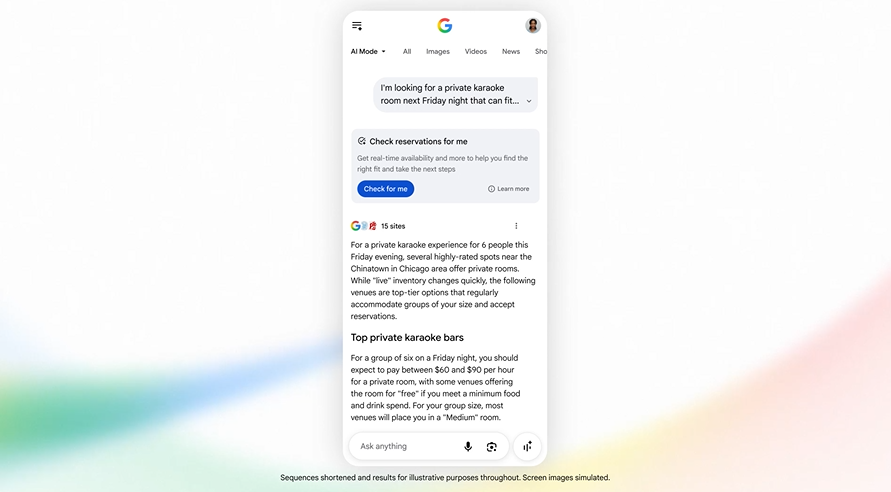
Google also introduced persistent AI search agents that can monitor topics in the background without users actively searching themselves.
For example, users can ask Google to monitor product pricing, availability, industry updates or local businesses matching certain criteria and automatically surface new information.
That’s a major shift from search being something users actively do towards information increasingly being surfaced for them automatically instead. For businesses, it reinforces the importance of publishing genuinely useful, trustworthy and well-structured content consistently.
What Should Businesses Actually Do?
If you haven’t already started reviewing how your content appears within AI-generated search experiences, now is the time. Businesses should be focusing on:
- Clear, useful content that properly answers questions
- Demonstrating genuine expertise and trust signals
- Structuring pages logically and clearly
- Improving content depth rather than producing more low-quality pages
- Strengthening commercial landing pages rather than relying purely on blogs
AI visibility is increasingly becoming an extension of good SEO rather than a completely separate channel.
If you’re already a Wildcat client, these changes are already factored into how we approach campaigns. Our SEO strategies are designed to improve visibility across both traditional search results and emerging AI-powered search experiences, so clients are already positioned well for where search is heading.
Google’s May 2026 Core Update Is Still Rolling Out
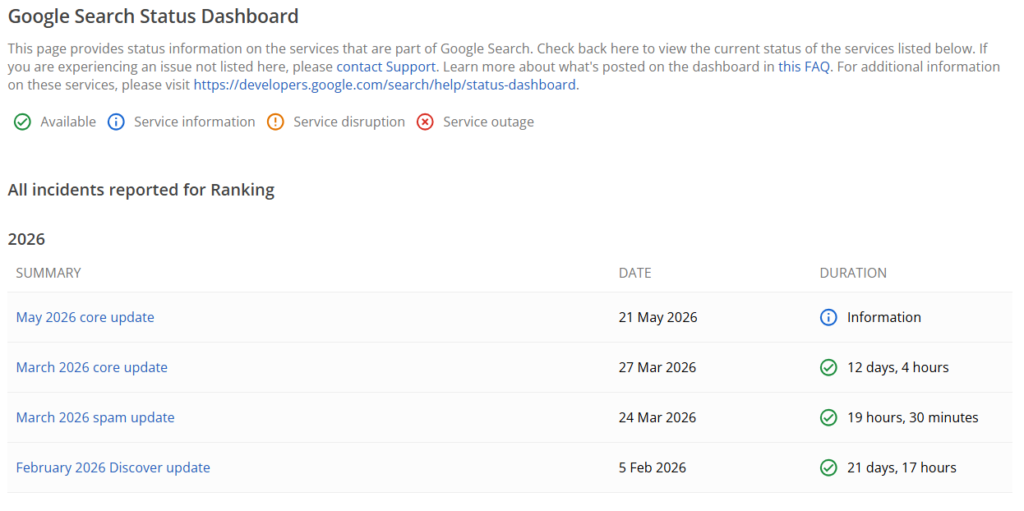
On 21st May, the day after Google I/O finished, Google launched its second core update of 2026. Search Engine Journal’s SEO Pulse covered the timing and context well.
The rollout began at 08:40 PDT on 21st May and may take up to two weeks to fully complete, meaning rankings are still settling at the time of writing.
What Is The Update Targeting?
Google hasn’t named any specific industries or page types, which is fairly standard for core updates.
However, the wider pattern across the SEO industry continues pointing towards the same themes we’ve seen for a while now:
- Original content
- Genuine expertise
- Strong trust signals
- Clear alignment with search intent
- Useful, satisfying page experiences
Sites relying heavily on thin AI-generated content, scaled low-quality pages or heavily over-optimised SEO tactics continue to struggle.
Why This Update Is Harder To Analyse Than Usual
One complication with this update is timing. Because Google launched the core update immediately after I/O while simultaneously rolling out broader search interface changes, AI Overviews and AI Mode updates, it may be harder than usual to isolate what’s actually causing traffic or ranking changes.
Some visibility shifts may relate to the core update itself. Others may relate to changing search behaviour within AI-powered search experiences. That means businesses should avoid making reactive decisions too early.
What Should You Do?
If you notice ranking or traffic changes:
- Review Search Console data from before and after 21st May
- Look for page-specific trends rather than sitewide assumptions
- Focus on improving quality, clarity and usefulness
- Avoid making large reactive changes during rollout periods
For most businesses, the right response is usually improving content quality and commercial relevance rather than chasing algorithm rumours. You can monitor the official rollout status on Google’s Search Status Dashboard.
Google Marketing Live 2026: Paid Search Is Becoming More Automated
Google Marketing Live took place on 20th May and heavily focused on automation and AI-assisted campaign management. Search Engine Land’s full GML 2026 recap is worth bookmarking if you want the complete picture.
The overall direction is becoming very clear. Google increasingly wants advertisers to focus less on manually controlling every keyword and more on giving its automated systems stronger messaging, landing pages, creative and conversion data to work with.
AI Max Moves Out Of Beta
AI Max for Search campaigns officially moved out of beta during the event. Google also introduced “AI Brief”, which allows advertisers to describe their brand, tone of voice, audiences and messaging preferences in natural language so Google can better shape ad copy and targeting automatically.
This matters because search behaviour itself is changing. As users move towards longer conversational searches, tightly controlled keyword-only strategies may become less effective over time.
The advertisers likely to perform best will be those with strong messaging, good landing pages and campaigns built around real customer intent rather than purely manual keyword management.
As more campaign types move towards automation, the quality of your website, landing pages, creative and conversion data becomes even more important.
AI Max For Shopping Campaigns
Google also announced AI Max for Shopping campaigns. This sits somewhere between Standard Shopping and Performance Max and is designed to better handle conversational and natural-language searches.
Historically, Shopping campaigns relied heavily on product feed attributes like titles and categories. AI Max broadens that significantly.
For ecommerce businesses with larger product catalogues, this could help products appear for a much wider range of relevant searches that traditional Shopping campaigns may previously have missed. It’s definitely something worth testing over the coming months.
Ads Are Now Appearing Inside AI Search Results
Google also confirmed ads can now appear directly within AI Mode search experiences, including around AI-generated summaries.
To access these placements, advertisers currently need to be using AI Max or Performance Max campaigns. This is a significant shift because conversational searches won’t always follow the same predictable journey as traditional high-intent searches.
Businesses relying too heavily on narrow keyword targeting may start finding that approach becomes less effective as search behaviour continues changing.
Meta Ads Updates: Longer Retargeting Windows And More Automation
Meta also rolled out several meaningful advertising updates during May.
Retargeting Audiences Extended To 730 Days
Meta has reportedly extended the retention window for Purchase-event custom audiences from 180 days to 730 days.
For businesses with longer buying cycles, this is genuinely useful. Previously, customers could age out of retargeting audiences long before they were realistically ready to buy again.
This update is particularly relevant for:
- Professional services
- B2B businesses
- Home improvement companies
- Higher-ticket ecommerce
- Businesses with longer sales journeys
AI-Generated Lead Forms
Meta also introduced AI-generated lead forms built directly from landing pages.
Instead of manually building forms, advertisers can now point Meta at a landing page and generate a form automatically.
Like most AI-generated tools, the output still needs reviewing properly, but it should reduce setup time for lead generation campaigns significantly.
Meta’s Perplexity Connector
Meta also introduced a connector with Perplexity, the AI-powered search platform.
This reflects a much broader trend happening across digital marketing right now:
Search, discovery and advertising are increasingly spreading across AI-powered platforms rather than sitting purely within traditional search engines and social media feeds.
Key Marketing Dates For June 2026
A few key dates worth keeping in mind for campaigns and content planning this month:
- 1st June: Global Day of Parents
- 5th June: World Environment Day
- 15th June: Global Wind Day
- 21st June: Father’s Day (UK) and Summer Solstice
- 21st June: World Music Day
- 22nd June: LinkedIn Live requirement deadline
From 22nd June onwards, all LinkedIn Live broadcasts must have a pre-scheduled LinkedIn Event attached before going live, so businesses using LinkedIn Live should make sure this is built into their workflow.
June is also Pride Month, which may present campaign opportunities depending on your audience and sector, though as always it’s important businesses approach awareness campaigns authentically rather than simply posting for visibility.
Final Thoughts
May’s updates reinforce something we’ve been saying for a while now. AI isn’t replacing SEO or paid search. It’s changing how both channels work.
The businesses likely to perform best moving forward are the ones investing in:
- Better quality content
- Stronger trust signals
- Clearer messaging
- Better user experience
- Stronger commercial landing pages
- Integrated SEO and PPC strategies
Stay Up to Date With Wildcat Digital
Keeping up with changes in digital marketing is one thing. Understanding what they actually mean for your website, visibility and lead generation is another.
Search, paid media and AI-driven experiences are all evolving quickly, and the businesses that adapt early are likely to be in a much stronger position over the next couple of years.
If any of the updates this month have raised questions, or you’d like a clearer idea of how your current SEO or PPC strategy is performing, feel free to arrange a free consultation with Rich, our Head of Growth. We’ll talk through what’s most relevant for your business, where the biggest opportunities are and what’s worth prioritising next.