
June 5, 2026

SEO Reporting & Attribution

Written by
Kezia Humphries

With over half of Google searches now ending without a click, measuring and reporting effectively on organic performance is more crucial than ever

SEO reporting often falls into the common trap of focusing too much on vanity metrics (think high-ranking low-volume keywords and traffic increases that aren’t backed up by conversion increases). Effective SEO reporting should focus on key performance metrics which are linked to recent SEO efforts and long-term business priorities. 

Every SEO report should answer the following questions:

  • What happened? 
  • Why did it happen?
  • What are we going to do about this?

It should translate:

raw data -> insights -> actionable recommendations. 

Keep reading for a more in-depth explanation of SEO reporting and why it’s linked directly to campaign performance and business growth.

Jump to section:

Key Takeaways

  • Every SEO report should answer three questions:
    • What happened?
    • Why did it happen?
    • What should we do next?
  • There are three main attribution models:
    • First click 
    • Last click 
    • Data-Driven Attribution (Default in GA4)
  • Keyword ranking data should be used to provide an early indication of how optimised content is performing, but should be combined with performance data for more valuable insights 
  • Be wary of falling into SEO reporting traps – focusing on metrics that look impressive but don’t drive business growth

What is Effective SEO Reporting?

Effective SEO reporting is the process of collecting, analysing, and presenting data to prove ROI, show campaign progress and deliver actionable insights. Rather than acting as a dumping ground for raw data, an SEO report should act as a collection of data-driven insights linked to performance, work undertaken and business priorities. 

Complex metrics should be contextualised and compiled to provide a narrative overview of recent website performance – a good SEO report needs to include the why as well as the what. For example:

“Overall tracking has dipped slightly year-on-year, but the majority of this traffic loss is from informational rather than commercial content. Looking at the priority landing pages which we have optimised recently, traffic is actually up 42% year-on-year, and engagement rate has improved dramatically as well. Conversions are also up 24% year-on-year, building a very positive picture of overall website performance.”

However, an effective SEO report needs to go one step further than just the what and the why; it also needs to answer the question: what next? There is no point just providing insights; those insights need to be actionable and fed back into future roadmaps and campaign planning. For example:

“As we have now finished optimising all property landing pages, it’s now time to turn our attention to the shortfall between the increase in traffic to these and the number of conversions. We will complete an in-depth CRO review, focusing initially on identifying quick win opportunities to help improve the conversion rate and drive more revenue.”

SEO reporting needs to provide clarity to stakeholders and clearly showcase what is happening, why it is happening and what happens next.

Data vs Insights

Data is the raw information, and it should form the foundation of every SEO report. However, on its own, it tells us very little about campaign performance. It needs to be followed by insights and then actions. These next steps transform raw data into real meaning and provide a link between what is happening right now and next steps. 

Insights provide the answer to So what? 


Actions tell us, so what’s next?

MetricDataInsightAction
Organic Traffic+15%Growth driven by service page optimisationsExpand optimisation strategy
Conversions-8%Landing page conversion rate declined after redesignReview UX and CRO
Rankings+12 keywords in top 3New content is performing well in the SERPsCreate additional content targeting related terms

SEO Attribution Basics

SEO attribution is the process of identifying and assigning which organic touchpoints have resulted in a conversion, such as a sale or contact form fill. This helps to connect your SEO efforts to measurable business outcomes. 

How SEO Shapes the Customer Journey

Most users don’t convert the first time they visit a website. Instead, they might:

  • Search for the answer to a specific question and land on your website by clicking on your blog post in the search results (either as an organic result or an AI Overview citation).
  • Do some more research around the topic using an LLM such as ChatGPT and come across your brand name as a mention.
  • Look for the specific service or product that you provide and land on your service page
  • Browse your website looking at reviews, case studies and other trust signals, but not yet making a purchase. 
  • Search again for what you offer, but this time visit a competitor’s website instead, comparing prices, features and benefits.
  • Visit your website again by typing in your brand name into the search bar and reading more about your product or service.
  • Click a retargeting ad whilst browsing elsewhere online or on social media, and finally complete a purchase.

This purchase has been driven by SEO (blog strategy, keyword research and targeting), GEO (content optimised for LLMs) and CRO (strong trust signals and clear CTAs) efforts, despite the final click and actual purchase coming through an ad. Different attribution models will assign this conversion differently. Below we look at some of the most common attribution models and how these are utilised in GA4. 

Common Attribution Models

  • First-Touch: Gives all the conversion credit to the very first page the user interacted with – in the example above, the conversion would be attributed to organic. In GA4’s User Acquisition Report, first-touch attribution is used. 
  • Last-Touch: Gives all the conversion credit to the final channel the user interacted with right before converting – in the example above, the conversion would be attributed to paid. In GA4’s Traffic Acquisition Report, Last Non-Direct Click is used as an attribution model, attributing conversions to the last visit that wasn’t a direct visit. 
  • Data-Driven Attribution (Default in GA4): This uses machine learning to distribute conversion credit across all marketing touchpoints. Fractional conversion credit is assigned based on past data and machine learning, so for the above example, the credit would be shared between organic, direct and paid.
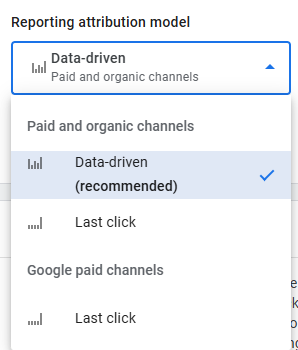
Learn more about attribution in our blog, ‘How GA4 Attributes Traffic to Different Channels’.

How to Report on SEO Performance Properly

Effectively reporting on SEO performance involves connecting organic search performance with revenue, sales and business priorities. 

Here are Wildcat Digital’s three top tips for reporting on SEO performance:

  • Select the most important metrics (4-8) to showcase and ensure they link to either recent work undertaken and/or business goals.
  • Utilise both month-on-month and year-on-year data, so you can effectively spot the impact of recent efforts and comment on long-term campaign growth. 
  • Include GA4, GSC and keyword ranking data to provide a comprehensive overview of performance and make links between different data sources to tell a more compelling story.

A Simple SEO Reporting Framework

A strong SEO report typically follows this structure:

Executive Summary:

  • Key wins
  • Key challenges
  • Recommended actions

Performance Overview:

  • Traffic
  • Conversions
  • Revenue/leads
  • Visibility and keyword rankings

Key Insights:

  • What drove performance changes
  • Opportunities identified
  • Risks emerging

Actions and Recommendations:

  • Priority tasks
  • Expected impact
  • Next steps

Read more in our guide, ‘SEO Reporting: What to Track and How to Explain It’.

Keyword Tracking in Context

When it comes to SEO, keyword rankings are a crucial metric, but they should not be the primary or sole KPI. 

Effective keyword tracking helps you:

  • Understand if recent optimisations match search intent and the keyword targeting is working.
  • Quickly diagnose drops in visibility and pinpoint which pages have fallen in the rankings, helping to guide your content optimisation strategy.
  • Identify quick win opportunities, such as pages ranking just outside of page 1, that will provide you with the biggest return on your SEO efforts.

However, keyword tracking should be combined with performance data for the most effective SEO reporting. For example:

“Our optimised service page is now ranking in position 5, up 16 places. Session starts have increased by 9% and engagement rate by 19%, indicating improved search visibility and traffic quality. While conversions remain unchanged month-on-month, further optimisation to secure a top-three ranking should help drive additional traffic and conversions.”

Mentioning keyword ranking improvements Learn more about keyword tracking in our blog, ‘How Do I Track My Keyword Positions on Google?’.

Avoiding Misleading SEO Metrics

Not all SEO metrics provide meaningful insights. Effective reporting prioritises metrics that support business objectives, rather than solely relying on vanity metrics, which may look impressive, but don’t deliver any insight into meaningful actions.

Common SEO Reporting Traps

  • Traffic Without Conversions –  An increase in traffic is always positive, but it only delivers business value if visitors take meaningful actions. Always assess traffic alongside conversion data. If the traffic increase is due to the performance of informational pages, this should be assessed alongside other metrics, such as domain authority, total keyword rankings, wider keyword performance and engagement rate. 
  • Keyword Averages Hiding Drops – Solely reporting on average keyword ranking positions can mask significant declines for high-value keywords. For example, if overall keyword visibility is up, but there have been several significant drops for priority commercial terms, this doesn’t necessarily indicate strong performance. Review performance at both page and keyword level to identify underlying trends.
  • Vanity Rankings – Strong rankings for informational or low-volume keywords may look impressive, but contribute very little to business growth. Prioritise commercial rankings that drive qualified traffic, leads, and revenue rather than reporting rankings for their own sake.
  • Year-on-Year Growth Without Context – Strong year-on-year improvements can be misleading if performance was unusually poor during the comparison period. Consider seasonality, market changes and recent activity when interpreting trends.

SEO Reporting Checklist

An effective SEO report should include:

Checklist

Expert SEO Reporting From Wildcat Digital

At Wildcat, our team are experts in delivering data-backed SEO campaigns, supported by monthly SEO report summaries and interactive dashboards. Each report is tailored to your unique business priorities and focuses on the what, the why and a clear outline of the next steps. Informed SEO reporting and recommendations are the backbone of good decision-making, campaign progress and long-term growth. 


Contact our team to learn more about how we can help your business make data-driven decisions.

Post by

Kezia Humphries

SEO Executive

Will Hitchmough

Founder

Our founder, Will Hitchmough, worked at a number of high profile Sheffield Digital Agencies before founding Wildcat Digital in 2018. He brings an extensive knowledge of all things related to SEO, PPC and Paid Social, as well as an expert knowledge of digital strategy.

Digital Marketing can be a minefield for many businesses, with many agencies ready to take your money without knowing how to deliver results. I founded Wildcat Digital to deliver digital success to businesses with smaller budgets in a transparent way.

Rich Ayre

Head of Growth

Rich joined us in May 2024 to head up our growth team. With years of experience helping other agencies to grow, Rich joins us at an exciting time as Wildcat is working on a five-year plan to become one of the biggest agencies in the UK.

Outside of work, Rich is a father to three children, which keeps him very busy! He’s also recently started running again to keep fit and loves a bit of DIY.

Sarah Tyree

Head of Digital

Sarah joined Wildcat in January 2025, bringing over seven years of SEO expertise to the team. With a background in Fashion Communication and Promotion, she has worked both in-house and at agencies, covering a range of digital marketing specialisms before focusing on SEO.

Passionate about all things search, Sarah thrives on helping brands grow their online presence.

Outside of work, she enjoys walking her dog, running, and shopping for vintage clothing.


Amelia Ashman

Office Manager

Amelia joined Wildcat Digital in January 2025, bringing extensive experience in HR, Health & Safety, Facilities Management and IT Support. Previously an Operations Manager at The University of Sheffield, she has a strong background in creating efficient and well-organized work environments.

Specialising in HR, Health & Safety, and Facilities Management, Amelia ensures the Wildcat Digital team has the resources and support needed to thrive. Whether managing office operations, maintaining compliance, or fostering a positive workplace culture, she keeps everything running smoothly.

Outside of work, Amelia loves trying new things, traveling, camping, and walking. She also enjoys socialising and exploring new places with friends and family. Her adventurous spirit and proactive approach make her a valued member of the team.

Siena Russell

Client Success Coordinator

Siena joined us in 2023 with a background in sales and digital marketing. She leads on client relationships across the company, ensuring that our customers are happy throughout their journey with us, from their initial consultation through to onboarding and beyond. 

Outside of work, Siena enjoys travelling and getting stuck into the local culture. She likes to make the most of her experiences and particularly enjoys watching sunrises and sunsets from beautiful locations around the world.

Paul Pennington

SEO Account Director

Paul has a strong background in SEO, having previously founded and ran a successful eCommerce business, as well as running a personal blog that achieves an average of 17K users per month. Paul’s knowledge of SEO is extensive, with a strong emphasis on client handling and technical SEO.

Outside of work, Paul enjoys spending time with his family and staying active with weight lifting and combat sports.

Dariusz Baczyk

Team Lead & Technical SEO Account Manager

With a degree in Computer Science and SEO experience dating back to 2017, Dariusz has a wide range of SEO skills and knowledge. His specialist knowledge of Technical SEO has firmly landed him the title of Wildcat’s Technical Wizard, and he has recently taken on the responsibility of Team Leader for the Panthers Team.

In his spare time, Dariusz loves hiking, experimenting and trying new coffees and loves learning new things. He is currently learning more about CRO and AI and how this could benefit our clients.

Molly Sturgeon

Team Lead & Senior SEO Account Manager

With a background in sales, Molly is a natural Account Manager, brilliantly handling any issues that come her way. Having joined us as a Digital Marketing Executive, and working part-time through her final year of University, Molly is a shining example of how hard work pays off. She is now an SEO Account Manager with a particular interest in Content and Client Management. 

In her spare time, Molly loves to get out in nature, hiking and exploring the Peak District. She also loves cooking and likes to unwind with a bit of yoga.

Libby Oldale

PPC Team Leader

Libby joined Wildcat in 2021 as our first PPC hire. With a degree in Digital Media Production, a Master’s in Digital Media Management and previous experience in Social Media Management, Libby hit the ground running and has since climbed the ranks to Senior PPC Account Manager and has a particular interest in the eCommerce sector.

Outside of work, Libby likes gaming, and cooking and likes to keep active by lifting weights.

Jamie Stowe

Senior SEO Account Manager

With a degree in Film and TV production, and a varied career history, Jamie made the move to marketing with a Masters degree in Digital Media Management. He has since worked in SEO at Agencies across Sheffield, before joining Wildcat and working his way up to SEO Account Manager. Jamie has a particular interest in backlinks and Digital PR and has recently gained a client a valuable backlink from Forbes!

In his spare time, Jamie is an avid foodie and loves trying new restaurants and cuisines. He also loves to travel and spent a year travelling to Australia after university.

Jasmine Savery

SEO Account Manager

Jasmine joined Wildcat in 2022 with a strong background in SEO and Account Management. At the time, she was finishing up a Level 4 Apprenticeship in Digital Marketing from the Chartered Institute of Marketing, and has since worked her way up to SEO Account Manager. Jasmine excels at content writing and promotion, and particularly enjoys finding creative ways to join the dots on multi-channel campaigns.

In her spare time, Jasmine volunteers at a charity, helping combat loneliness & social isolation experienced by older neighbours. Outside of Wildcat, she owns a catering company, Savery Grazing, creating delicious grazing tables & platters for a range of events. She also loves skiing and exploring the Peak District.

Jon Herdman

Senior SEO Executive

After spending ten years managing businesses, restaurants, cafes and event spaces across Sheffield, Jon decided to change careers and joined Wildcat as an SEO Executive in 2022. He especially enjoys the client management side of the job, helping them to understand digital marketing and ways in which they can build their business’s presence online. 

Outside of work, Jon likes to keep fit with running, badminton and football, and also loves music. 

Andy Blanchard

Senior SEO Executive

Andy joined Wildcat in 2023 after starting his digital marketing career in-house for a local Sheffield company. Since joining, he has developed a strong interest in Technical SEO and has strong skills in Account Management. 

Outside of work, Andy loves music and plays in a couple of bands. He also enjoys rock climbing, cycling, photography and good food.

Tom Brookes

PPC Executive

Before joining Wildcat, Tom worked across different industries, building skills in sales and customer service. He later developed a passion for digital marketing whilst working on personal marketing projects and freelance ventures, and gained numerous certifications in PPC and Social Media. 

Outside of work, Tom enjoys staying active by going to the gym and hiking. He also loves travelling and motorbiking.

Kezia Humphries

Senior SEO Executive

Kezia joined us in July 2024 after completing a CIM Certificate in Digital Marketing and gaining experience in Content SEO at another Sheffield agency.

In her spare time, Kezia loves to get outdoors, bouldering, hiking and travelling.

Alex Hickling

Senior PPC Executive

Alex joined Wildcat Digital in December 2024 as a Senior PPC Executive, bringing a strong background in Paid Media, Paid Social, and Programmatic advertising. With a degree in Business & Marketing and Google Ads certifications, she has the expertise to craft high-performing campaigns that drive results.

Before joining Wildcat Digital, Alex worked at two leading agencies in Leeds, honing her skills across various digital advertising platforms. Her analytical mindset and strategic approach help businesses maximize their online presence and advertising budgets.

Outside of work, Alex enjoys spending time with her dog, Lola, and going on walks with her dog walking group. She’s also a keen footballer and loves playing five-a-side whenever she gets the chance. Her enthusiasm and team spirit make him a great addition to the Wildcat Digital team.

Amy Varley

SEO Executive

Amy joined Wildcat in 2024 with a background in journalism, having worked as a News Editor and Editor-in-Chief at The Sheffield Tab. She is naturally interested in Content SEO and research, so will no doubt prove to be a content power-house.

In her spare time, Amy loves watching crime shows, listening to music and hanging out with her dog, Eddie!

Reiss Mason

SEO Executive

Reiss joined the Wildcat Digital team in July 2025, with a background in journalism and digital content, Reiss brings both creativity and technical know-how to the team.

After graduating with a Journalism Studies BA from the University of Sheffield, where he also served as Games Editor and Deputy Editor for the student-run newspaper – Reiss jumped straight into the world of climate tech communications.

Outside of work, Reiss loves crochet, swimming, playing guitar, and diving into both video and board games. He’s always up for picking up new skills and trying new things – which makes him a perfect fit for our team!

Lucy Young

Senior SEO Executive

Lucy joined the WildcatDigital Team in August 2025, with solid SEO experience and a creative edge from her work in wedding videography, a combination that brings both strategic insight and storytelling flair to the team.
When she’s not deep in keyword research or editing stunning wedding footage, you’ll probably find Lucy exploring new places on long walks or unwinding with a few books.

Bekky Croson

Office Assistant

Bekky joined the WildcatDigital Team in October 2025, with over a decade of customer-facing experience – including running her own vegan café.

Bekky brings a wealth of energy and expertise to the team. When she’s not keeping things running smoothly in the office, you’ll find her cooking up a storm for friends or playing hockey with the Sheffield Women’s squad.

Bianca Croitoru

PPC Account Manager

Bianca joined the WildcatDigital Team in October 2025, having worked with charities from £100k to £7M, blue-collar lead gen businesses, and clothing e-commerce brands – building multi-channel marketing strategies that flow seamlessly, Bianca will be a real asset to the team.

When she’s away from the office, Bianca loves diving into holistic health experiments… and indulging her inner conspiracy theorist (or truth seeker, depending on who you ask).

Fiorela Imerai

SEO Account Director

Fiorela joined the WildcatDigital Team in October 2025, she joins us with a strong background in SEO and Digital PR, helping UK and global brands grow their online presence and strengthen their reputation.

Outside of work, you’ll usually find her cooking, exploring new places, or “just browsing” flights… that she’ll probably end up booking!

Eviee Taylor

SEO Senior Executive

Eviee joined the WildcatDigital Team in January 2026 and has a background in marketing and SEO for the education and theatre industries, with a keen passion for writing and accessibility.

She is also a keen crafter, theatre-goer and certified cat lady!

Liv Hardwick

Content & Proposal Writer

Liv joined the WildcatDigital Team in June 2025, with a strong background in financial admin and client care, Olivia is taking an exciting step into the creative world – and we’re so glad she’s doing it with us!

She’s currently studying content creation through her apprenticeship with Wildcat, and already bringing fresh energy and creativity to the team.

Outside of work, Olivia runs her own BIAB nail business, loves reformer Pilates, long walks, and is a member of a competitive dance team.

More blogs.

View all

What is Schema in SEO?

June 5, 2026

Schema markup is how you let the search engines know exactly what is on your site. Think of it as…

Lucy Young

Knowledge Hub
Technical SEO

Is Structured Data a Google Ranking Factor?

June 5, 2026

Structured data is an important aspect of SEO that can improve click-through rates, conversion rates, and bring in more traffic…

Eviee Taylor

Knowledge Hub
Technical SEO

Local SEO – How to Get Found by Customers in Your Area

June 4, 2026

Local SEO is one of the most commercially valuable forms of search optimisation. When someone searches for a service near…

Jamie Stowe

Knowledge Hub
Marketing