
There are many things that can influence how your website ranks on search engine results pages (SERPs). Domain authority is becoming increasingly important to your business and understanding where you stand compared to your competitors. It takes into account various factors and improving it can be a lengthy process. So, what is an authority score, and can better rankings help to boost it?
An authority score is a metric created by a number of SEO tools to measure the overall quality and trustworthiness of a website or domain. Quite a few factors inform the score, so it can take a while to see improvements. Authority scores use a number ranking system from 1-100, with a score of around 80 being considered excellent. Backlinks are extremely important and, in combination with other methods to increase your rankings in SERPS, they should boost your authority score.
Read on to find out more about authority scores and whether better search rankings can help to improve yours.

What Is An Authority Score?
Authority scores, also known as domain authority, is a metric used in the SEO industry to measure the likelihood of a website ranking in SERPs. It is by far not the only influence on your website’s ranking, but can suggest to your audience that its content is trustworthy and relevant.
Domain authority (DA) is a ranking score developed by online SEO tool Moz, now also used by the likes of SEMRush, to help SEOs and businesses understand how authoritative their site is.
It is not a Google metric and has no effect on SERPs.
However, it is based on Google’s ‘PageRank’ algorithm. It was available to the public, allowing SEOs to manipulate the results. This was removed from the Google toolbar in 2016, which is why Moz created its own ‘authority score’ metric. Although PageRank data is no longer available to the public, many people speculate that Google still uses it to form part of its algorithm. There are rumours that, although a smaller contributor than it may have been previously, PageRank is still one of many signals that influence your domain’s rankings.
How Is Your Authority Score Measured?
Moz explains their DA as being “calculated by evaluating multiple factors” and combining them into one score. This includes aspects such as the total number of links your site has received or the DA score of the sites you link to. As of 2019, DA calculated by Moz has been the result of machine learning algorithms, meaning your score might fluctuate as new data points become available and are taken into account.
Different tools may use a variety of data sources to score your site’s domain authority. For example, SEMRush uses three clear metrics to measure quality scores:
- Link Power: This is based on the quality and quantity of your backlinks. If sites with a high domain authority are linking to your site, then this will improve your score.
- Organic Traffic: The estimated monthly average of organic search traffic to your website. This figure comes from the number of visitors that come from unpaid sources, particularly search engine results.
- Spam Factors: This metric looks at whether your site is spammy or has a natural link profile. High spam scores could be a result of linking to other sites deemed spammy, having a poorly maintained site or the use of ‘black hat SEO’ techniques.
Find out more about the factors that influence authority scores in our blog post “What is Domain Authority and How Can I Increase it?”.
Backlinks
Building a backlink profile is one of the best ways to increase your authority score. The first step is identifying your competition and analysing their backlinks. Find any that are also relevant to your business and this should give you a clear idea of places to find content relevant to your niche. You could even contact these businesses once you’ve produced some high quality content and ask for a collaboration. As long as the content is useful, more websites should want to link to it.
Read our blog post “How Many Backlinks Do I Need to Rank?” to find out more about how to build backlinks and the focus on quality over quantity.
What Is A Good Authority Score?
A good domain authority score is typically considered to be between 50 and 60, with scores of around 80 being considered excellent. However, this can vary depending on the industry, competition, and the scores of other websites in the same field. It may be that a lower domain authority score might be considered good for some industries.
For example, if your business is fairly niche and your competitors also have a low domain authority, then you only need to score higher than them. DA is a comparative piece of data and shouldn’t be looked at in an isolated capacity, but next to that of the businesses you’re competing with.

How Can You Check Your Authority Score?
Online tools like SEMRush and Moz can help you check your domain authority score. You can also use these tools to check the scores of your competitors, their backlink profile and which keywords they’re trying to rank for.
Different SEO tools might show different DA scores because of the variety of factors used to inform them. Consistency in your choice of tool will help you track improvements in the long term and find areas for improvement.
Using Moz To Analyse Your Authority Score
Being the original developer of the domain authority score, you might decide to use Moz to gain a bit more insight into how your site’s performing. There are a couple of ways to do this, but here’s the simplest:
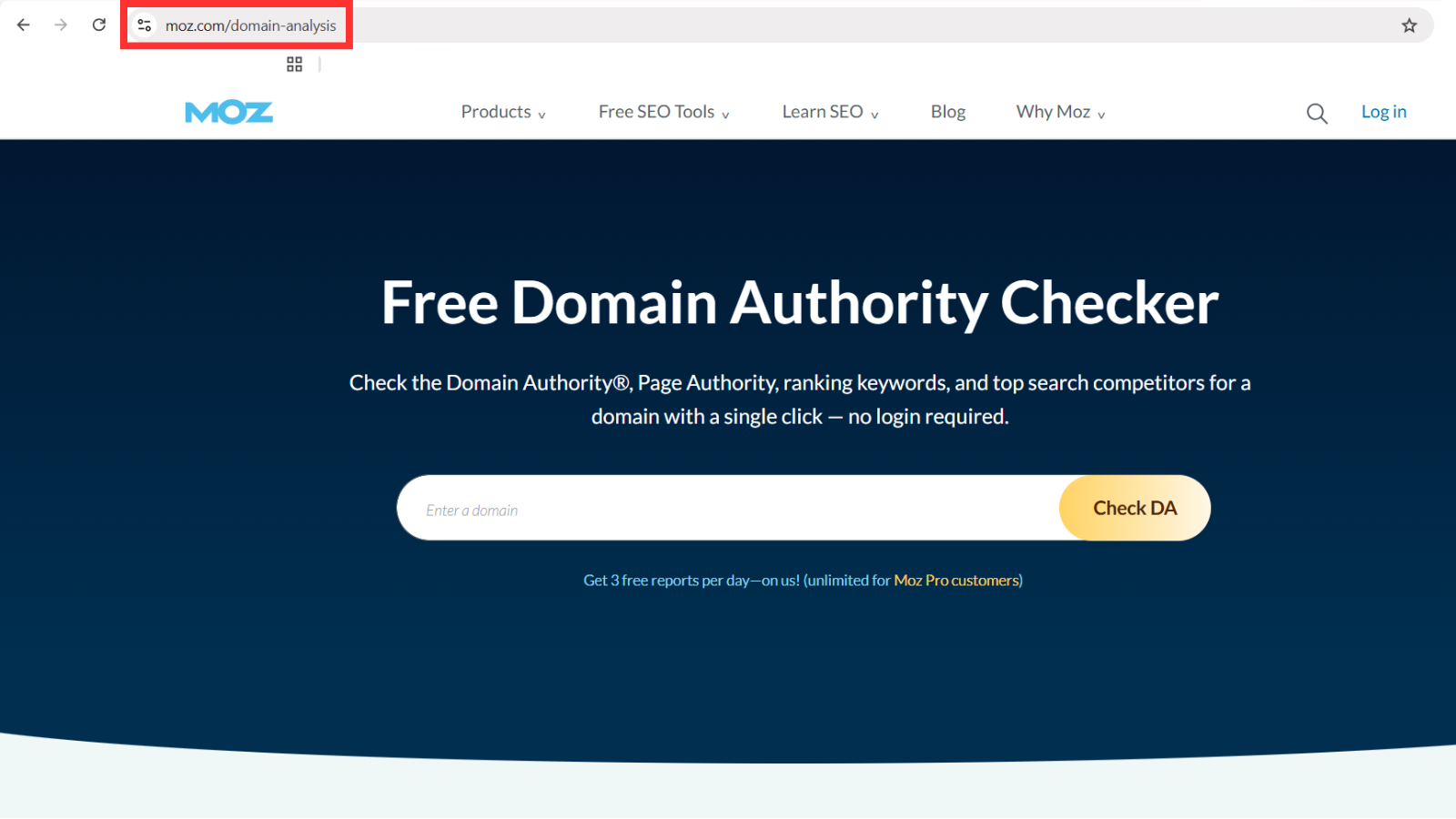
- Navigate To Moz’s Free DA Checker
- Enter Your Domain And Click ‘Check DA’
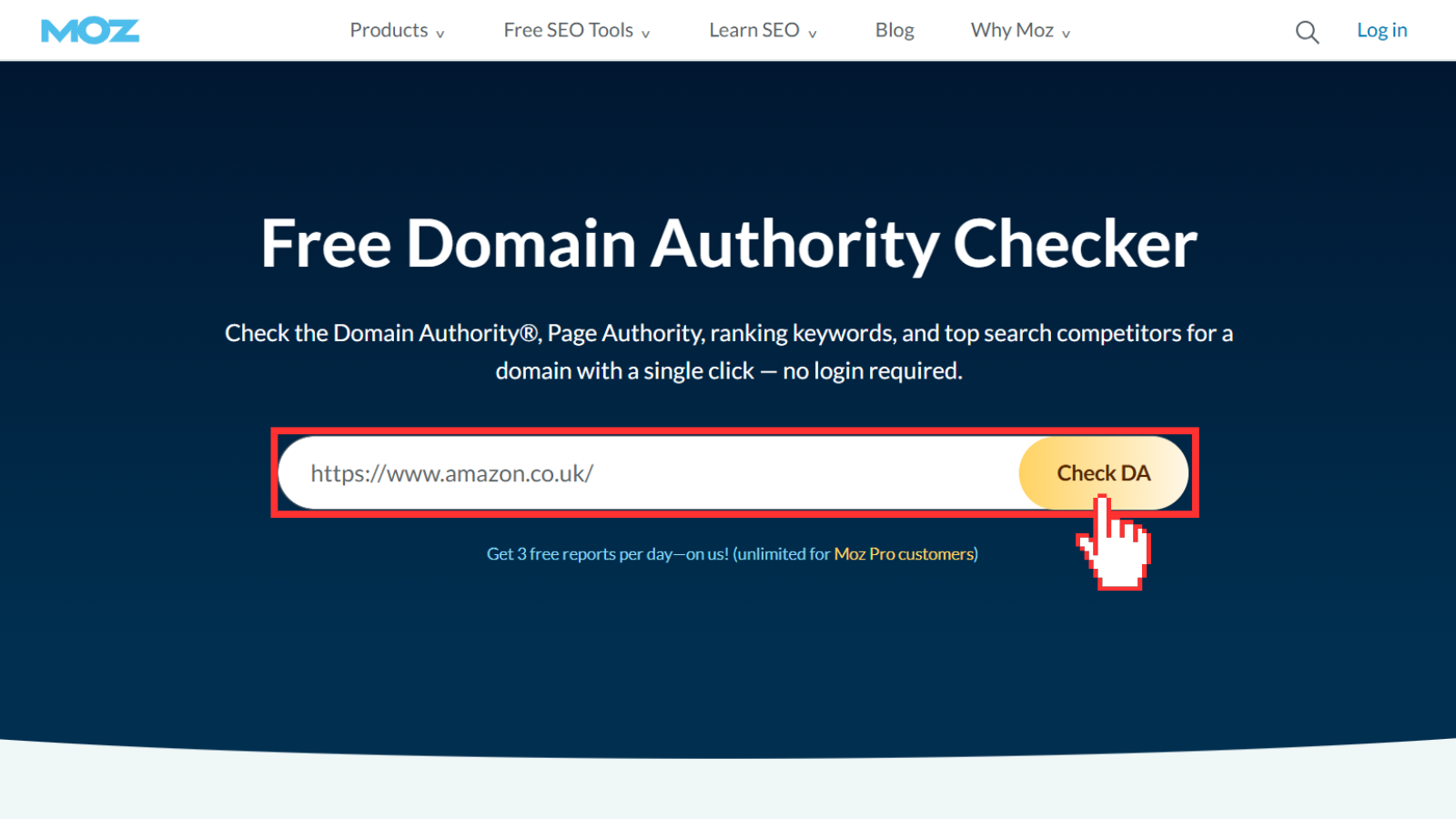
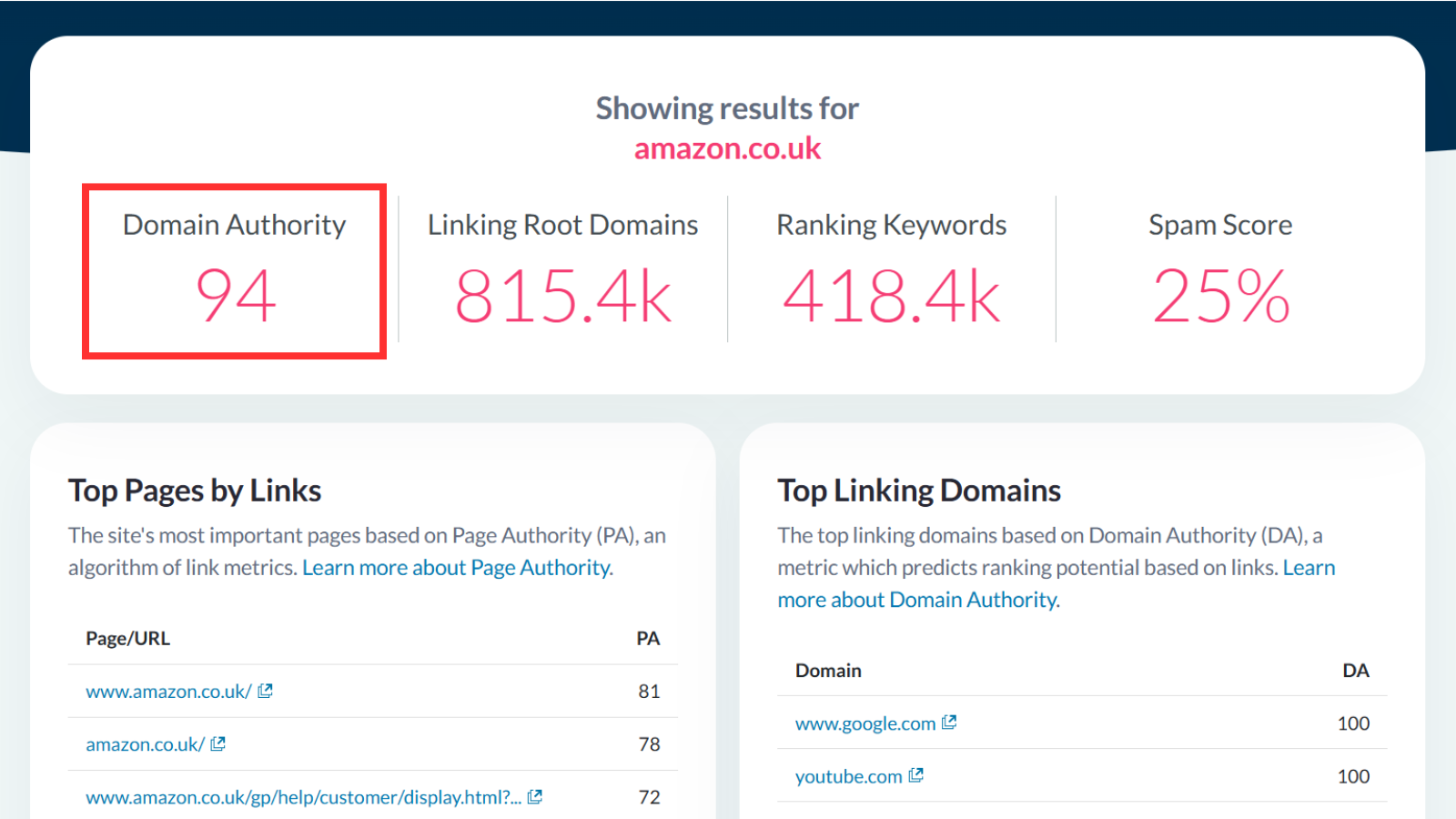
Important Note: This free DA checker lets you read three reports per day for free. If you need to access more data, you’ll need a Moz Pro account, where you get unlimited searches.
Finding Out Your Authority Score On SEMRush
Here at Wildcat Digital, we use SEMRush to analyse your domain authority and provide you with a journey to improve your online presence. If you’re trying to do this alone, however, the dashboard can be intimidating. So, here’s a step-by-step guide on how to use SEMRush to find your site’s domain authority:
- Navigate To ‘Domain Overview’ On The Left-Hand Menu
- Enter The Domain You’d Like To Analyse And Click ‘Search’
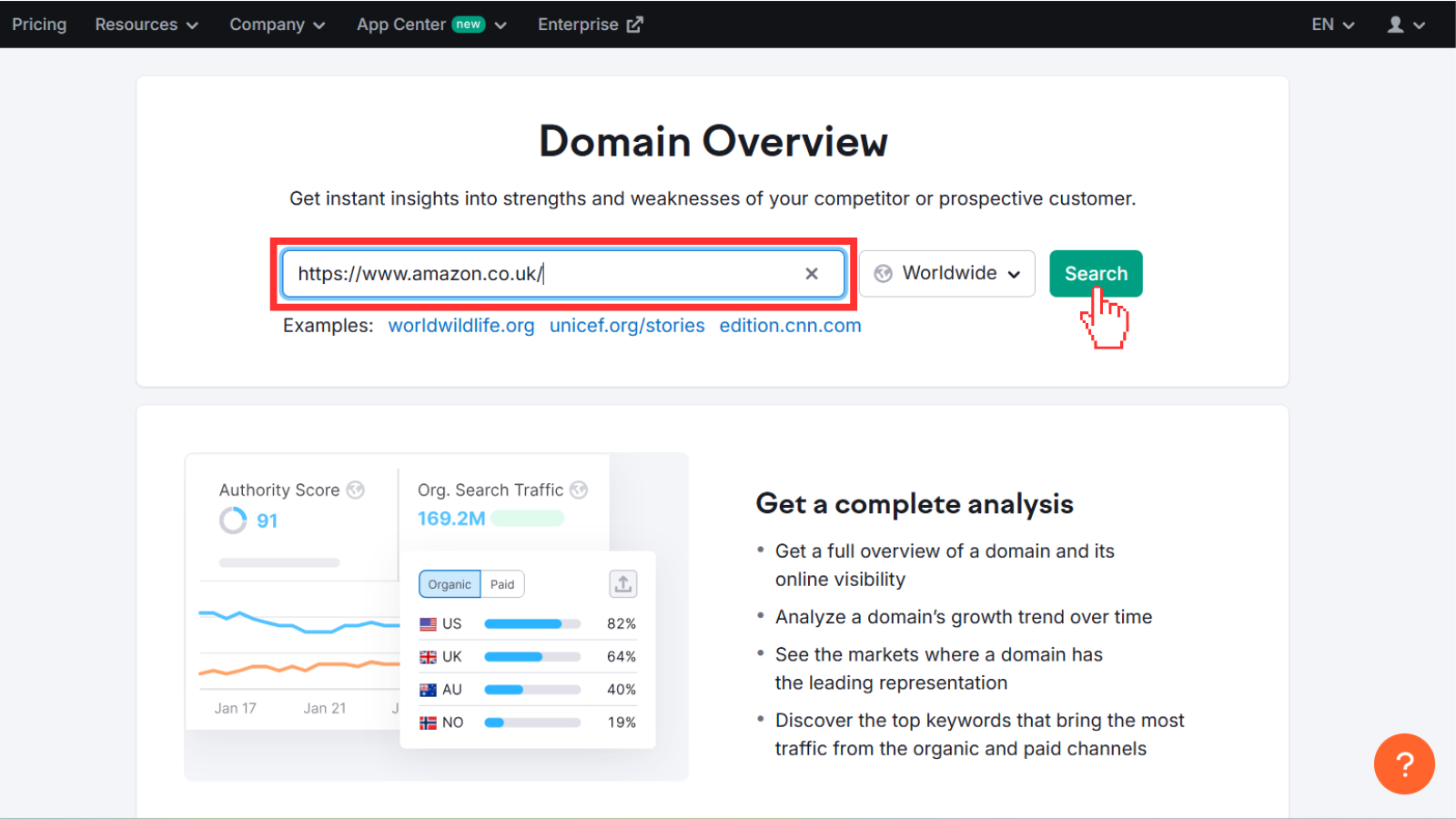
- You’ll Find Your Domain Authority On Screen, Or Click The Number To Find Out More
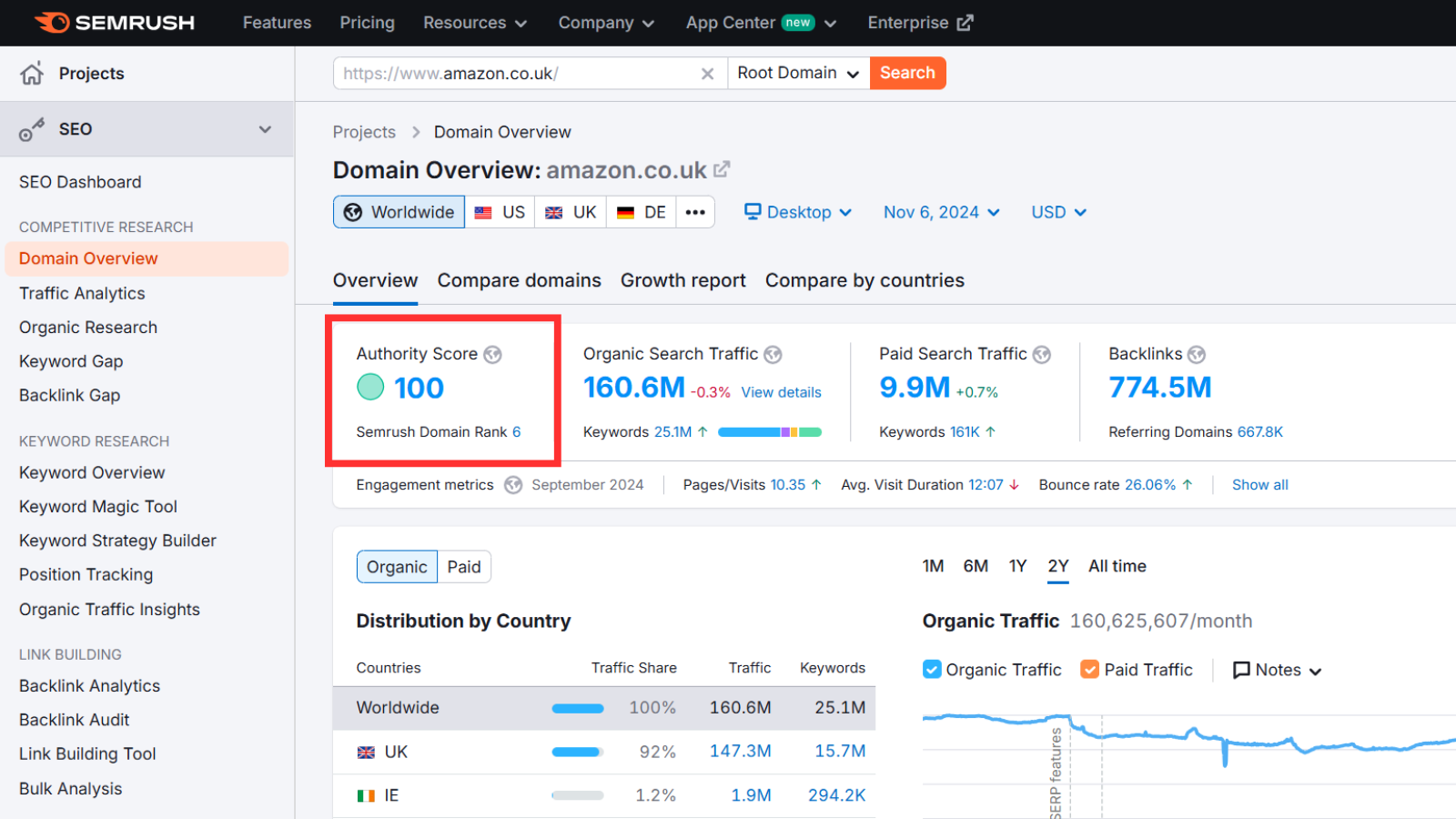
All this data can be difficult to understand and the subscriptions to services like these can get expensive. Why not get in touch with Wildcat Digital and let us help you navigate your authority score?
Can Better Rankings Boost Your Authority Score?
Yes! Creating high-quality content that ranks well and attracts more organic traffic can improve your website’s domain authority score. Attracting backlinks is also a great way to boost your score, and creating valuable content (which is more likely to be shared by other websites) will help with this.
According to Backlinko, a high level of organic traffic indicates to search engines that your content is both ranking well and meeting quality standards. Highly ranking content is more likely to be seen by other websites and shared as backlinks, thus boosting your domain authority.
Why Should You Increase Your Authority Score?
There are a number of benefits to increasing your domain authority score. Here are a few of them:
- High quality content will attract backlinks, further increasing your score.
- Organic traffic will increase as a result of higher rankings on SERPs.
- Your audience will see your website as trustworthy and can provide valuable information.
- Increasing your domain authority will give you opportunities to to rank above your competitors. This could result in an increase in sales or lead generation.

Improve Your Authority Score With Wildcat Digital
As with most SEO practices, boosting your authority score can be a lengthy process. Interpreting the data can also be difficult, so why not let Wildcat Digital help your business through it? Arrange a free consultation today and transform your website!

Amy Varley
SEO Executive