Are you trying to grow your business online, but are feeling overwhelmed by all the options available to you? SEO and digital PR strategies are often discussed, but it can be hard to know which is right for you. Let’s break it down.
So, which is better – SEO or digital PR?
Digital PR and SEO are both key strategies for improving your brand’s presence online. They both increase awareness and visibility of your business, but each has a different focus. SEO aims to increase your website’s rankings in search results, and digital PR focuses on building a positive reputation online. The best choice for your business will depend on what you’re looking to improve about your online presence.
Read on to find out more about digital PR and SEO, and which is best for your business.
What Is The Difference Between SEO And Digital PR?
SEO and digital PR are both powerful strategies, each with their own process and focus. They achieve different goals, so it’s important to understand which suits your business needs. Here’s a quick overview of each approach:
SEO
SEO, or ‘Search Engine Optimisation’, focuses on enhancing your website’s visibility in search engine results pages (SERPs). By improving your site’s ranking on SERPs, SEO looks to increase organic (unpaid) traffic.
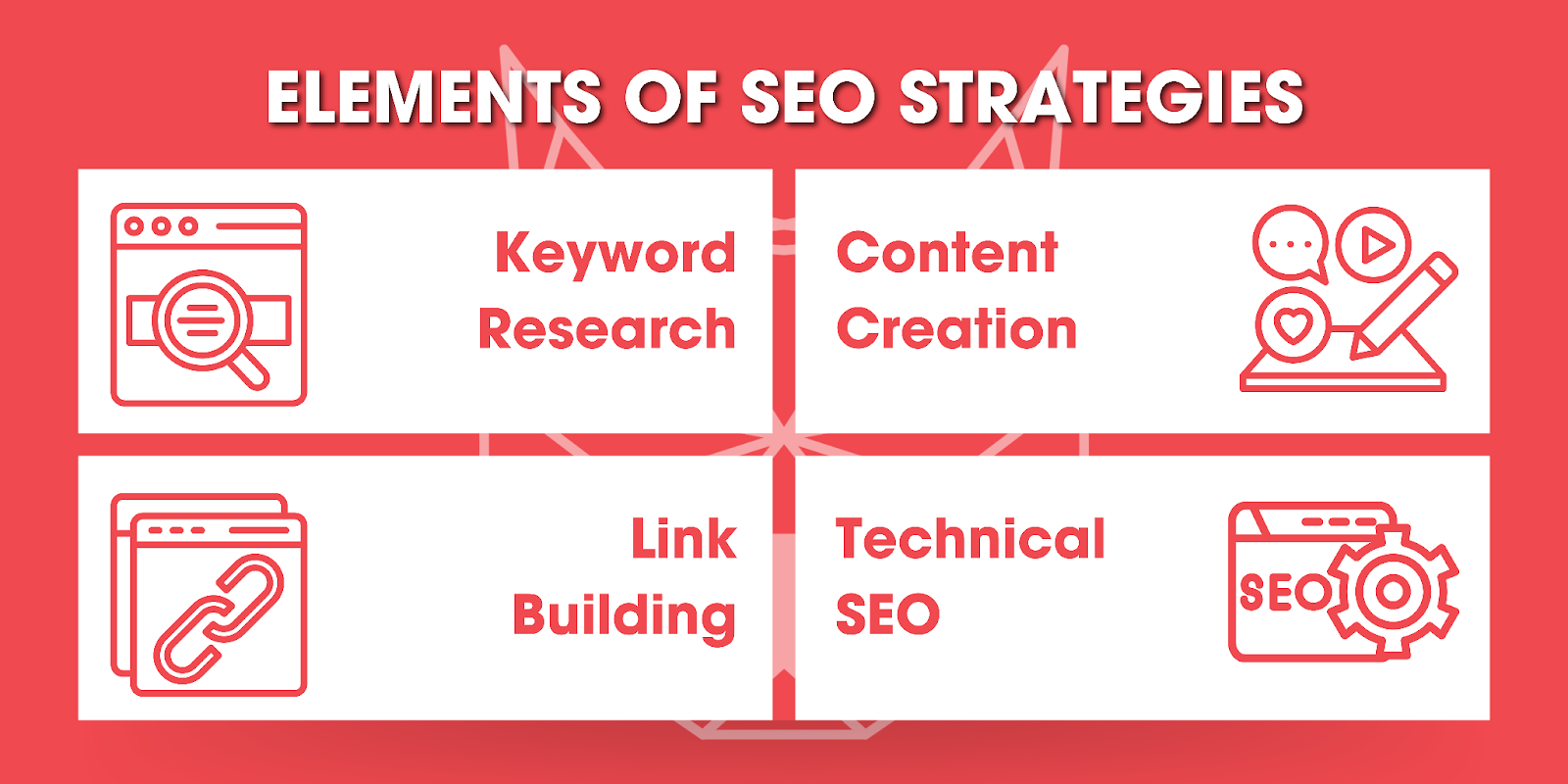
Some of the tasks involved in SEO include:
- Keyword Research: Find out what people are actually putting into search engines, and make sure they naturally appear throughout your content.
- Content Creation: You might need to create new content to match the word count of each keyword. This allows you to match user intent and write additional copy for pages with thin content.
- Technical SEO: Improving aspects like website speed, mobile accessibility, and structured data can also benefit your site’s ranking. The necessary fixes are unique to each website and can be complex.
- Link Building: To rank in the top spots, you’ll need a high domain authority (DA). DA is gained through link equity, with other high-value websites linking to yours through backlinks. This is an essential SEO element, showing your website is trustworthy and relevant.
Digital PR
PR, known in full as public relations, aims to establish a positive reputation online, and build a relationship between you and your target audience. Digital PR uses online channels to enhance your brand’s credibility.
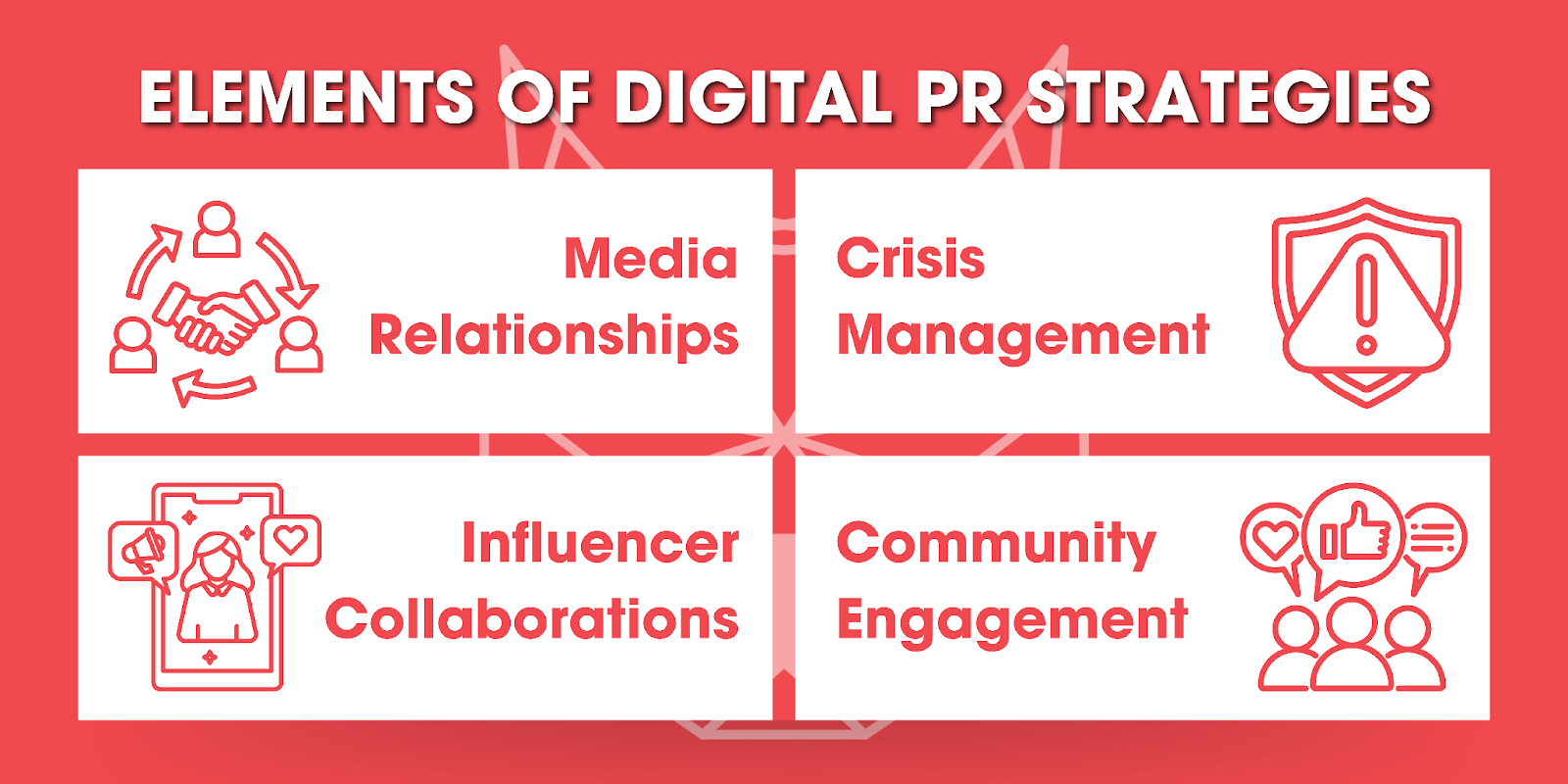
Here are some of the steps that might form part of your digital PR strategy:
- Media Relationships: Building a good relationship with journalists and editors gives you a bigger chance of positive reports and wider coverage of press releases. Brands and journalists work hand-in-hand, so this is a key aspect of digital PR.
- Crisis Management: PR can help you to change the narrative of any incident that could damage your brand’s reputation. You need to take action to reduce the impact of these events, and digital PR can help you do this.
- Influencer Collaborations: Influencers have a wide reach of audience and know how to create trending content. Asking them to feature your brand can build awareness and increase organic traffic.
- Community Engagement: Both online and offline engagement is also a great way to build your brand’s reputation. You can do this through events, collaborations, or social initiatives.
- Content Creation: Like SEO, you’ll often need to create new content as part of your PR strategy. This will give you a basis for your outreach, whilst also generating organic traffic.
Find out more about the difference between Digital PR and SEO in our helpful blog: “Is Digital PR and SEO the Same Thing?”
Which Approach Is Better For Your Business?
If you’re dealing with a limited budget, you’ll need to look at the focuses and involved tasks we outlined above. Decide what you need to improve about your business and choose the option that is most likely to get you there.
However, a marketing strategy that includes both digital PR and SEO will get the most out of this process for your business. The two approaches work hand-in-hand, complementing each other.
How Do SEO And PR Work Together?
There are a number of ways that digital PR and SEO benefit each other, meaning that the best marketing strategies will come from using them both well.
Digital PR gives you more opportunities to gain high-quality backlinks and media attention. You can also drive targeted traffic to your site using PR, which search engines see as a positive ranking factor. PR also strengthens domain authority, which will boost your rankings as a whole.
You can read more about the relationship between domain authority and SERP rankings in our blog: “What Is An Authority Score, & Can Better Rankings Boost It?”
On the other hand, implementing SEO techniques can make sure that the increased visibility you gain from digital PR translates into traffic and conversions. Combining these strategies aims to increase engagement, brand credibility and, most importantly, sales. Improving your content quality and expanding your business’ audience are amazing ways to increase your online presence, and can be done with both SEO and PR.

What Are The Pros And Cons Of Digital PR And SEO?
When it comes to choosing which strategy is better for your business, you’ll want to take a look at the strengths and weaknesses for each. Making sure the approach you choose is right for your budget, work environment, and employees, is vital to keep your business running as well as possible.
SEO
Pros:
- Cost Effective: The organic traffic you’ll see from SEO is essentially free, once your site ranks well. This reduces the need for paid advertising, whether traditional or digital.
- Better User Experience: Using SEO practices to improve your website’s content can help to enhance the user’s experience.
- Measurable Results: The results of an SEO campaign are measurable, allowing you to track everything from rankings and conversions.
Cons:
- Time Consuming: It can take anywhere from 6 to 12 months for results to show from an SEO campaign. You can find out more about this in our blog: “How Long Does SEO Take?”
- Algorithm Updates: The results of an SEO campaign can be unpredictable, thanks to the algorithm updates of search engines.
- Constant Maintenance: An SEO strategy requires ongoing reviews and adjustments to make sure your success continues. You’ll need to adapt to the ever-changing nature of SERP ranking, altering the campaign to meet new requirements or to offset any negative impacts.

Digital PR
Pros:
- Brand Recognition: If you’re looking to improve the online presence of your business, digital PR is a great way to increase brand recognition within your desired audience.
- Flexibility: You can adapt your PR strategy to fit current trends and popular topics. Links and mentions are much more likely if they’re relevant to what the wider audience is interested in.
- Improved SEO: Digital PR can contribute massively to your website’s SEO, by attracting quality backlinks. This is one of the most important driving factors for rankings.
Cons:
- Information Overload: It can be difficult to break through and get your content featured. Journalists and editors receive a huge number of emails everyday, so you’ll need unique content to cut through the competition.
- Cost: Digital PR techniques can take a lot longer to implement. Even when using outreach programmes like Prowly, PR is time-consuming, which can often mean you’ll need a higher budget to cover every step.
- Difficult To Measure: It can be difficult to measure the results of a PR campaign. Useful programmes, like Prowly, often provide figures on open and click rates, but this can be hard to measure if you’re manually outreaching.
So, Which Is Better – SEO Or Digital PR?
Even after reading our summaries of each approach, you still might be struggling with which one is best for your business. Remember, it’s not about PR being better than SEO, or vice versa. You need to choose the right strategy for your brand, considering every aspect, including budget, time, and what your goals are.
If you’re looking to increase your online visibility and organic traffic, SEO is probably the way to go. PR is more suitable if you’d like to boost your reputation within the local community and build relationships with media organisations.

Online Marketing With Wildcat Digital
If you’re unsure which approach suits your business best, we’re here to help. We understand that it can be difficult to know where to begin when it comes to digital marketing, no matter what strategy you choose. The team at Wildcat Digital are experts in helping you punch above your weight online, so why not let us handle it?
We’ll work with you to build a bespoke strategy that fits every aspect of your business. Take the next step to grow your brand online, and get in touch with our team today.

Amy Varley
SEO Executive