
A number of marketing agencies are now offering PR services to complement a website’s SEO, PPC, and other digital marketing strategies. But is it right for every business? It can be difficult to know whether a digital or traditional campaign is right for you, and understanding the key differences is key to making the right marketing decisions. So, what is digital and traditional PR, and how do the two strategies differ?
The aim of PR, whether traditional or digital, is to achieve media coverage for your brand, boosting brand awareness, and gaining the trust of your target audience. Traditional PR focuses on print newspapers and magazines, as well as traditional broadcasting channels like TV and radio. Digital PR focuses on online news, websites, blogs and social media. They mainly differ in their execution methods and target audiences.
In this blog, we’ll take a deeper look into both digital and traditional PR, outlining their key differences and benefits for your business.
Back To Basics: What Is PR?
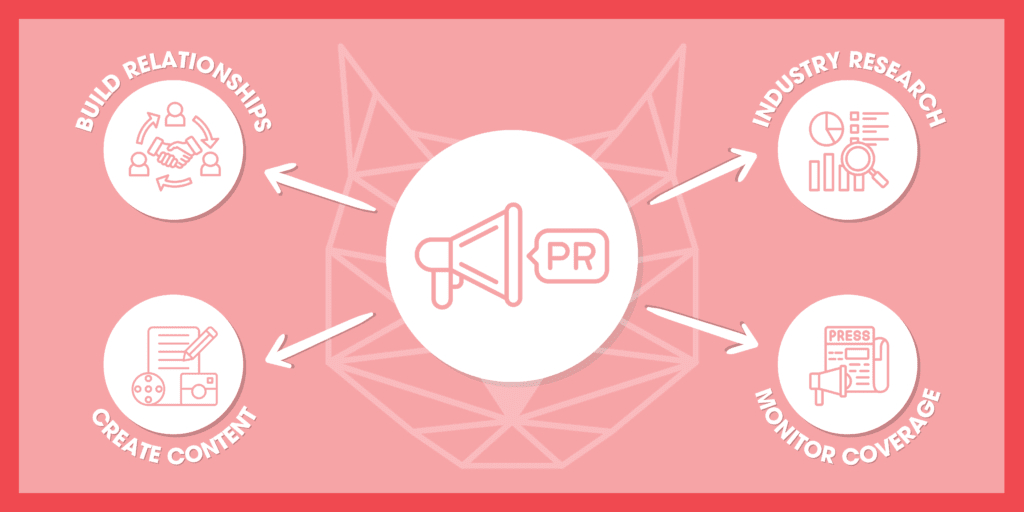
Public relations, or PR, is a marketing strategy that uses a number of techniques to build on your brand image and increase coverage. Unlike paid advertising, PR influences your potential customers using credible, third-party endorsements. It’s all about building and maintaining a positive reputation of your brand, with the help of some common steps:
- Building relationships with journalists to not only get positive coverage, but also be their go-to for expert comments and industry news.
- Creating content, like press releases or articles, to share information with the public, ideally through a publication with a large reach.
- Researching your industry to get a clear picture of public opinion and to help you identify PR opportunities.
- Monitoring coverage to understand how your brand perception may be changing and monitor the effectiveness of your strategies.
What Is Traditional PR?
Traditional PR is the classic approach, focusing on gaining coverage through established offline channels, like TV, radio, newspapers, and magazines. It places a particular focus on relationship building with journalists to get mentions in trusted outlets.
This strategy may include:
- Press Releases: Sending official statements to the media, announcing news, events, product launches, or company updates.
- Media Outreach: Pitching stories to journalists and offering interviews, expert comments, or feature articles.
- Broadcast Coverage: Securing interview places on TV and radio programs to reach their bigger audiences.
- Event Management: Organising press conferences, trade shows, or media events to build public interest.
What Are The Strengths Of Traditional PR?
- Credibility: Traditional outlets have often been established for much longer, meaning they can be seen as more trustworthy.
- Brand Prestige: Being featured in a trusted major print or broadcast outlet adds a layer of legitimacy to your brand.
- Increased Reach: Traditional media still has a large audience, even in the digital age.
What Are The Weaknesses Of Traditional PR?
- Measuring Results: It can be difficult to track engagement or ROI precisely with traditional media, especially on print publications.
- Turnaround Times: Some publications might have longer editorial cycles, so getting coverage could take time.
- Limited Targeting: Traditional media outlets often have broader audiences, so it may be difficult to target a niche industry audience.
What Is Digital PR?
Digital PR is a modern evolution of the traditional practices mentioned above, focusing on increasing a brand’s online presence through certain channels. This method includes a range of digital marketing strategies to target the ideal audience.
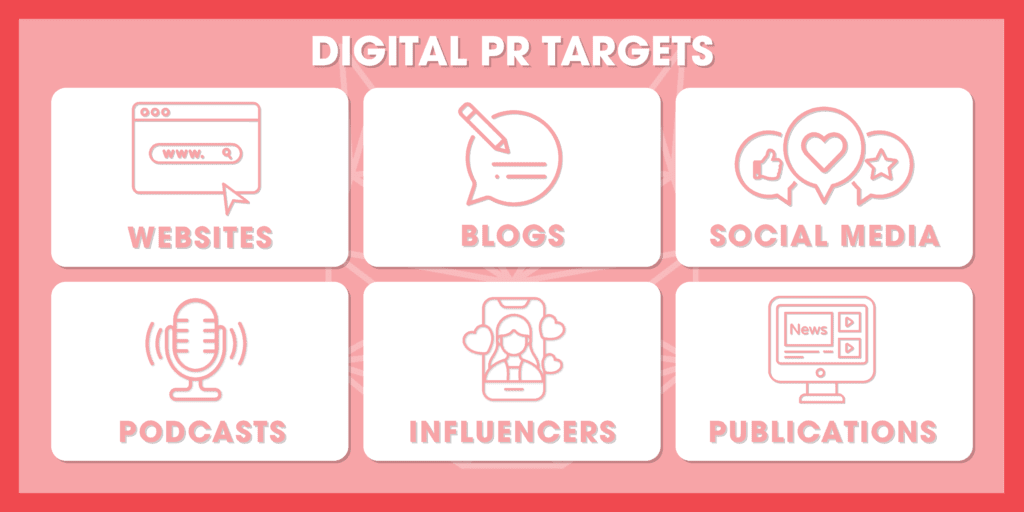
Instead of targeting TV, newspapers, or magazines, you’ll focus on:
What Are The Key Components Of A Digital PR Strategy?
There are a number of components that can make up your brand’s digital PR strategy. Choosing the right options for you depends on your business or product you want to raise awareness of but, typically, you’ll utilise the following:
- Online Press Coverage: Secure mentions and backlinks from other high-authority websites, online magazines, and digital news outlets.
- Content Marketing: Create valuable content that can be easily shared to not only gain backlinks, but also improve SEO rankings. This might include infographics, surveys, or even expert insights.
- Influencer Outreach: Collaborate with influencers, bloggers, or other niche content creators to amplify your brand’s message.
- Social Media: Use social media platforms to distribute your PR stories and engage with your desired audience.
- Reputation Management: Monitor your reviews, comments, and mentions to shape how your brand is perceived online.
- Digital Media Kits: Provide accessible resources, like graphics and images, for journalists and creators to download and use instantly.
- Newsjacking: Piggyback on trending news stories to share your brand in a creative manner.
What Are The Benefits Of Digital PR?
In today’s digital world, this type of PR strategy can often be preferred over traditional practices. There are a number of reasons for this, including:
- SEO: Gaining high-quality backlinks from other authoritative sites boosts both search engine rankings and organic traffic.
- Find out more about the relationship between SEO and digital PR in our helpful blog: “Which Is Better – SEO Or Digital PR?”
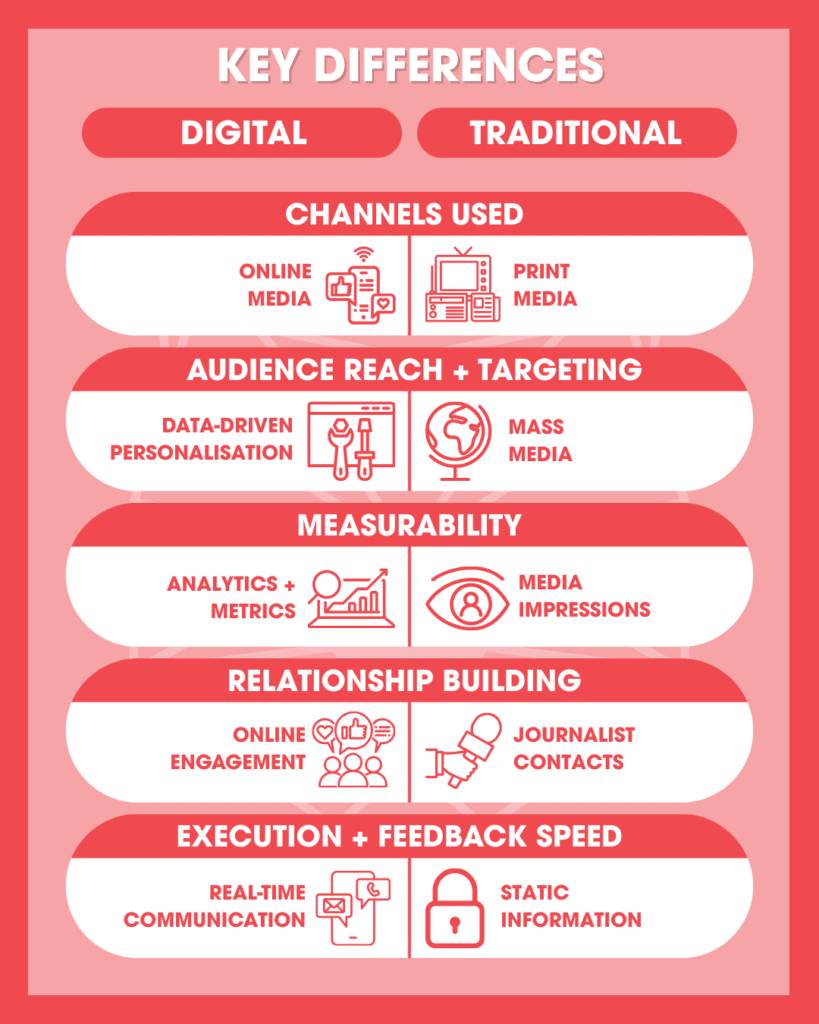
- Performance Tracking: Unlike print and broadcast coverage, it’s easy to monitor impressions, engagement, and clicks using software like Google Analytics.
- Precise Targeting: Digital PR allows you to target the more niche blogs, influencer campaigns, and social media pages.
- Fast Turnaround: Online stories can go live instantly and be quickly updated or optimised if necessary.
Digital PR vs Traditional PR: An Overview
How Can You Decide Which PR Approach To Use?
When deciding which PR approach is best for you and your business, you’ll need to compare a few things.
- Goals: Do you want to focus on simple brand awareness or an increase in traffic and conversions? This will impact the channel you target.
- Budget: Which approach is the most efficient and scalable for your budget range? Traditional PR can err on the expensive side, whilst you may be able to try your hand at digital PR with a limited budget.
- Target Audience: Where does your audience live and how do they consume content? If your audience mainly consumes stories through social media, digital PR may work best for you.
- Industry: What works best for the niche or industry your business falls into? If your audience is primarily older, you may want to focus on print publications/traditional PR.
How Can Wildcat Digital Help?
Whether you’re struggling to decide on a PR approach, or have made a choice to move forward with digital PR, why not get in touch with our expert team? We can support you throughout the process, from planning and ideation, to outreach and pitching.
Arrange your free consultation below and help your business punch above its weight online with our digital PR services today!

Amy Varley
SEO Executive