SEO is an ever-changing landscape. With the ever-increasing prominence of AI in our field, how do SEOs find their place in this landscape and add value to the businesses that approach us for our work?
Here at Wildcat Digital, we stay up-to-date with current and upcoming trends in SEO, PPC and marketing strategy to add value to the businesses that we work with.
Coming off the back of our April News Roundup, we will take a look at how Google has changed their game, shifting provenance from its internal algorithm to enhance search results that promote good, well-written content over generative content, whilst also bringing in generative search results in through the backdoor.
So how does this affect us as SEOs and business owners, and how do marketing updates in May affect this ever changing landscape?
Google Generative AI in Search – Googles Gemini Era
As we mentioned in our April News Roundup. Google is now providing AI-generated FAQ results for users in the US, and it is set to roll out this feature in the UK and the rest of the world over the coming months.
Since we last wrote about the topic, Google held a conference called Google I/O (Tues, 14 May 2024), which gave us further insight into Google’s stance on Generative AI and how it will soon provide quick responses to some of the UK’s most commonly asked questions online. Google is naming this service ‘Gemini’, however, this service may be more of a double-edged sword than a two-faced coinflip.
This new service might be great for Google, but what does it mean for our web traffic, and what does this mean for our authoritative FAQ responses showing in Google Search?
At present, we aren’t quite sure. However, even if Search Engines provide clear links to our content (from which the Generative AI Response gets its answer), this rollout doesn’t seem to positively affect web traffic towards our sites and the information contained within. So what’s going on here?
We recently reported on Google’s Algorithm Update, which rolled out over a 6-week period between March and April of this year. This rollout was typically cryptic from Google, however, it is believed that the ability to rank for FAQ results has been maligned by Google and other search engines, making FAQ snippets harder to attain, favouring only those domains which have very high Domain Authority.
Increasing the provenance of FAQs, whilst also allowing these results to be automatically generated within the search engine seems to suggest that Google is readying itself for a full AI FAQ rollout, and covering itself from any possible blame when the AI generates a less than favourable response.
SEOs globally must ready themselves and adapt their strategies for this rollout. Exactly what this entails currently remains unknown to the industry.
Google Ads To Automatically Pause Low-Activity Keywords
Google has announced that it will start to automatically pause low-activity keywords in an effort to boost keyword spend and budget allocation for its Ads users.
According to an internal email, Google will automatically pause any keyword which hasn’t had any impressions across the preceding 13-month period.
So what does this mean?
In essence, keywords with no impressions in Google Ads accounts drag down the performance of the account by affecting the Quality Score. This was initially hinted at in March 2024, and now Google Ads users will need to unpause these keywords manually to allow them to appear after the update, which is slated for a June release later this year.
Google claims that this new function will allow advertisers to focus on the keywords that drive results.
Anyone who manages a Google Ads account with many keywords may need to review the visibility of these keywords in the coming months and realign their strategies accordingly.
Google Adds 2 New Crawlers to its Roster – GoogleOther-Image and GoogleOther-Video
Googlebot is a web crawler that crawls and reads web pages, finding, following and indexing the content contained within these web pages. Once it has crawled the page, it then becomes eligible to be added to Google’s Index, thereby becoming eligible to appear in Google Search Results.
In a recent announcement, Google has announced two new Googlebot crawlers: GoogleOther-Image and GoogleOther-Video.
Current iterations of Googlebot include:
Googlebot
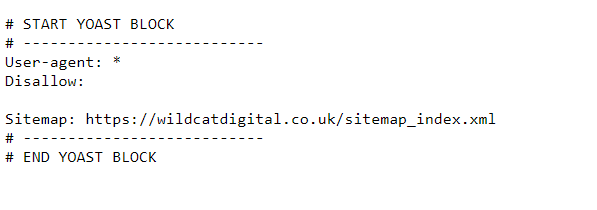
The main crawler for Google’s search products. This crawler, according to Google, always respects robots.txt rules. This means that it will only crawl those pages which are not disallowed through robots.txt.
Special-Case Crawlers
Crawlers that perform specific functions, such as AdsBot, do not always respect robots.txt rules.
User-Triggered Fetchers (Google Search Console Prompted)
Some tools and product functions require the end-user to trigger a fetch. For example, the Google Site Verifier acts upon the user’s request, and certain Google Search Console tools will prompt Google to fetch the page based on a user’s request.

So Why Do These New Crawlers Matter?
GoogleOther-Image is optimised for retrieving publicly accessible image URLs, while GoogleOther-Video is optimised for retrieving publicly accessible video URLs.
These new crawlers are optimised for fetching image and video data from web pages. The GoogleOther-Image and GoogleOther-Video crawlers are designed to improve the crawling of binary data, such as images and videos, which are used for research and development purposes.
This rollout may be for AI purposes, as they likely will help Google understand the content contained within images and videos for regenerative purposes. At this point, it is unclear. Keep an eye on this blog for further updates on Google and the bots they use to crawl pages in the upcoming months. However, with the suggestion that these bots are crawling for ‘research and development’ purposes, it is commonly considered that these bots are indeed trying to understand images and video to help their AI Tools.
As Google also announced the rollout of new, more advanced generative AI image and video creation options, these bots could be working to collect data on behalf of these tools.
This is due to Imagen 3 being announced for image generation, and Veo, a tool which can create video clips from text prompts also being announced during GoogleI/O conference.
Useful Tools for SEO and PPC Across May
Here are some of the best tools that we use every day here at Wildcat Digital to help our clients monitor and understand data, online.
SEO Meta in 1 Click
SEO Meta in 1 Click allows users to view important metadata on–page. This includes:
- Title and its length,
- Description and its length,
- URL (and meta-canonical url too),
- meta-robots,
- Displaying headers in order of their appearance in HTML (H1, H2, H3, H4, H5 and H6),
- Number of images with and without ALT,
- The number of links (internal, unique, …)
- Open Graph and Twitter Social Data
- Robots.txt and sitemap.xml
Add this extension to Google Chrome here.
SEOquake
SEO Quake allows users to quickly view important metrics in search results. This tool combines with SEMRush to give immediate insights into important site metrics, including:
- Keyword difficulty
- Run a complete SEO audit of a webpage, including a check for mobile compatibility
- Checking your social statistics for Facebook
- Using a wide range of default parameters or create a custom set
- Getting a full report for internal/external links
- Determining a keyword’s density and configuring a stop-word list
- Comparing URLs/domains
Add SEOquake to your browser by following this link.
Toggl
Toggl is a simple time-management app that allows you to add, update and store time logs in-browser quickly. This tool could be useful for anyone who works in a digital marketing environment.
Add Toggl Track: Productivity & Time Tracker to your browser here.
Michael Heppell’s 5-Star Service: How to Deliver Exceptional Customer Service
Anyone looking to upskill their customer service skills ought to read Michael Heppell’s 5 Star Service: How to Deliver Exceptional Customer Service.
This book outlines key skills for offering exceptional service to customers, clients and associates in manageable and actionable steps.
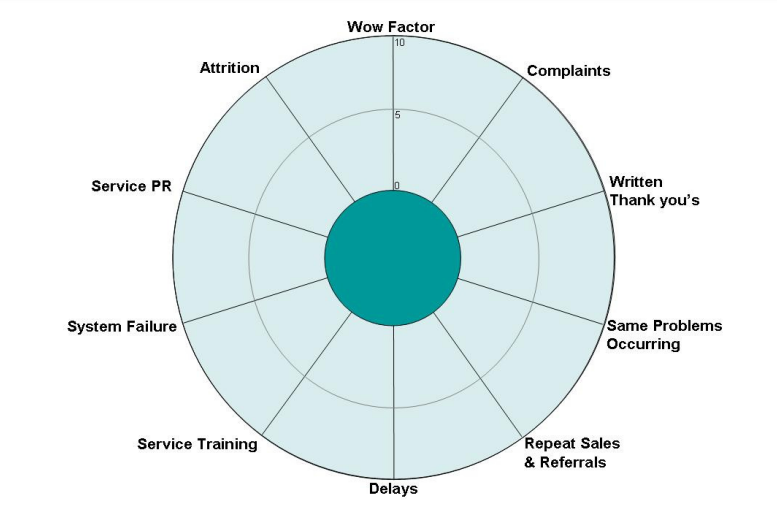
Using published and peer-reviewed books like we do here at Wildcat can upskill your customer service skills, helping you and your team keep clients in your good books. This helps everyone retain perspectives on goals within your organisation and indeed within your own campaigns.
Upskilling Your SEO and Punch Above Your Weight Online with Wildcat Digital
Here at Wildcat, we keep our fingers on the pulse of modern digital marketing, updating our strategies as the landscape changes. To help your business punch above its weight online, contact us today for enhanced SEO strategies, creative content solutions, and cost-effective PPC campaigns.

Jon Herdman
SEO Executive