As we enter into 2026 and reflect back on the year as business owners and digital marketers, we can’t help but notice the vastly changing landscape of digital marketing and SEO.
With the advent of LLMs, ChatGPT, Google’s AI Overviews, Gemini and more, our digital assets and marketing campaigns seem to be more nebulous than ever. Of course, we have seen this before with Google’s RankBrain Update in 2015, or the BERT Update in 2019, or the solid integration of EEAT measurements in 2018.
We, as SEOs, digital marketers and business owners, have weathered a shake-up in SERP appearance over the years; however, with LLMs generating their responses from the vast amounts of human-written content online, and on a query-by-query basis, where does this leave traditional SEO?
More to the point, how do we pivot our campaigns and understanding to get results out of these models, offering a return for our businesses or clients?
Large Language Models such as ChatGPT and Google’s AIO have changed SEO by taking preexisting information online and repurposing it in generated text. This results in a reduction of clicks and views on our content, often at the cost of brand awareness. As these responses are generative, it has become increasingly difficult to get our content to appear in search results and report on these results as milestones in our campaigns.
All is not lost, however, as here at Wildcat Digital, we are right on the cutting edge of SEO and LLM citation attainment in 2026, helping you market your brand, product and services with LLMs, rather than against them.
So, let’s get started and find out – what are LLMs, anyway?
Jump to:
- What are large language models (LLMs)?
- How LLMs impact search
- SEO challenges in the age of LLMs
- Opportunities for SEO in the age of large language models
- Content strategy in the LLM era
- The role of brand and structured data in LLM visibility
- The Wildcat Digital playbook for LLM SEO success
What Are Large Language Models (LLMs)?
LLMs or Large Language Models are tools such as ChatGPT or Gemini that generate conversational text based on an input. These services can answer anything, from ‘what is a snake?’ to ‘how many planets are visible in the southern hemisphere in 3 days’ time?’.
LLMs are built with billions of data sets, built up from an index of written data found online, allowing them to ‘learn’ answers for these queries, or find tools to help answer these queries in a conversational way.
As versions advance, the models have been given the ability to search online for answers from brand-new data (known as Retrieval-Augmented Generation), allowing for advanced, up-to-date data retrieval.
As these models have become widely used, they have started to replace (or integrate on top of) search engines when helping users navigate our everyday lives.
In short, rather than Googling ‘the best restaurants in Manchester seafood’, the search shifted to speaking with ChatGPT in a less defined way. A query might become ‘hey ChatGPT, what are the best restaurants in Manchester that serve seafood and have two-for-one cocktails tonight?’.
This movement away from defined and predictable inputs by users, to a more conversational, generative approach, is era-defining for the user, but it leaves digital marketers less able to ensure that their campaigns (here being a campaign for a seafood restaurant in Manchester) with a tangible target and metric for success.
With LLMs replacing Google Search for many, how do we as SEOs naturally integrate our brands in front of LLMs to help them suggest our campaigns to users?
How LLMs Impact Search

It has been reported that ‘two-thirds of consumers think AI will replace search in the next five years’.
Let’s assess how that might indicate how SEO is changing in the future.
The traditional model of SERPs was 10 blue links on a page, ranked by Google or other search engines to show users a selection of information, brands or products related to that search.
When a user would read our information, enquire about our service or purchase our products, we could see that our marketing efforts had paid off.
For instance, if we go back to my seafood restaurant example, having my restaurant show up on Google Maps and at the top of Google SERPs would very likely make us the most popular seafood restaurant in town. We would target this outcome by using various SEO methods, such as on-page optimisations, encouraging reviews from happy customers, and getting our names out there in best-of publications. Even having our name in the conversation can have positive impacts, as other restaurants might not be able to cater to us, or the customer may prefer our pricing.
Clearly, there is a lot at play, and SEO is a constant effort to appear above our competition for these placements, with clear incentives to do so.
From Search Engines to Answer Engines
With generative search, it isn’t clear that our brands, products or services are being placed in this conversation at all, as all the conversations are generated at the point of request from a different mix of information. This information is then made conversational and user-adjusted. This means that, whilst our business goals (people booking a table at our seafood restaurant) have stayed the same, we are unable to precisely say where this brand information has been presented.
Even as Google integrates LLMs into its search with its AI Overview Feature, these metrics can’t be clearly defined or repeated due to the generative nature of the result.
In short, reporting on consistent performance is no longer possible, and attaining the citations doesn’t follow the same rules as a typical Google Search. As such, SEOs have been figuring out new methods to help attain AI citations and show the benefits of doing so. Read our blog: “How To Measure SEO Success In The Age Of LLMs” for more information.
SEO Challenges in the Age of LLMs
As mentioned, digital marketing is struggling with 3 main issues in December 2025:
- How to Position Content to Be Cited and Referenced by AI,
- How to Show That These Citations are Valuable,
- How Do We Adequately Report on These Citations?
Let’s take a look at each of these issues and assess how you can get your campaigns back on the right track. But first, let’s take a quick look at why our metrics seem to be taking a knock with the advent of LLMs and SEO.
Why Click-Through Rates Are Falling
“Click-through rate” is a simple metric through which we report on how many search engine users clicked onto our website from SERPs, divided by the number of users who saw our website in the search results. So, the click-through rate is the number of clicks / the number of impressions, resulting in a number by which we can monitor our performance in SERPs.
Across many industries, we have seen a drop in click-through rates on long-form content as the usage of LLMs has increased. This indicates that users are now getting their information from LLMs such as Google’s AIO, without clicking through to our content.
This, in turn, prevents our brands from being seen within SERPs, leading to less brand recognition, fewer users, and potentially fewer conversions through data analytics.
However, ChatGPT and Gemini are still providing businesses and services within their tools, so how do we appear on LLMs, alongside traditional SERPs? Unfortunately, the top Google Results aren’t the ones that are being pushed by LLMs, as LLMs read and understand signals coming from these brands differently than Search Engines.
How to Position Content to Be Cited and Referenced by AI
If LLMs are becoming the new gatekeepers of visibility, then the goal for modern SEO is not solely to rank, but also to be referenced by LLMs.
These models select trustworthy, well-structured information from the web to answer user queries, so the focus needs to shift from search intent to citation intent.
Here are a few ways to make your content stand out to LLMs and generative search tools, from an SEO Agency:
- Prioritise clarity over creativity: AI models prefer unambiguous, well-structured explanations. Write definitions, processes, and comparisons in straightforward language that can be easily parsed.
- Use consistent entities: Clearly define people, brands, places, and products with the same names and details across your website. This helps LLMs recognise you as an authoritative source.
- Add structured data: Schema markup (FAQPage, Article, Product, Organization, Course, Person, etc.) provides clear signals about what your content is and why it’s relevant.
- Cite credible sources: When you link to trustworthy references, your own content inherits contextual authority, which LLMs take into account when summarising or quoting information.
- Write with context, not keywords: Use complete sentences that answer likely conversational questions (“what is”, “how to”, “why does”), so your content aligns with the structure of AI queries.
In short, you’re writing for the model as much as for the reader. The clearer and more factual your content is, the more likely it is to be referenced in an AI-generated response.
How to Show That AI Citations Are Valuable
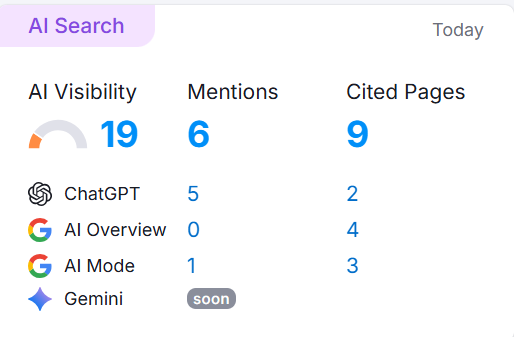
Being mentioned by an LLM can feel intangible, but it’s still valuable. These citations often increase brand visibility and trust, even when users don’t click a link.
Measuring and communicating that value simply requires a broader view of what success looks like in 2026, and into the future of digital marketing.
Consider these markers of value for your SEO campaigns:
- Brand recall and search volume: Users who discover your name through ChatGPT, Gemini, or Google’s AI Overview often later perform direct searches for your brand. Track increases in branded impressions or queries over time through Google Search Console for this metric.
- Referral patterns from AI search platforms: Use analytics tools such as GA4 to identify referral traffic from AI-powered browsers and answer engines (Perplexity, Brave Search, Bing Copilot). These are small but growing segments. You can also track UTM links that are sometimes appended by LLMs to links to your campaigns (for instance, ?utm_source=chatgpt). Drill through your referrals in GA4 and collect the UTM links, or find common UTM links used by LLMs, and filter them into a report metric.
- Indirect engagement: A rise in social mentions, newsletter sign-ups, or quote requests following an AI mention shows brand awareness building beyond the click. You can track this on Google Trends, Search Console, or GA4.
- Visibility testing: Periodically prompt LLMs with relevant questions (“Which is the best seafood restaurant in Manchester?”) and record when your brand appears. While anecdotal, it helps demonstrate influence in emerging search ecosystems. This feature may become possible using APIs, or via tools such as Advanced Web Rankings, SEO Monitor, or even SEMRush.
By reframing SEO reporting around brand presence rather than position, agencies can show that AI citations hold measurable, real-world impact even in a zero-click environment. Linking LLM citations to performance increases in the campaign semantically, or even side by side with key events linked with your campaign, to show a performance increase.
One thing is clear: because of the generative nature of LLM conversations and the lack of stored, available data for the third-party software listed above, tracking LLM citations is not easy.
Let’s take a deeper look at how you can track LLM citations for your digital marketing campaigns.
How to Report on AI Citations and LLM Visibility

Traditional SEO dashboards weren’t built for tracking LLM citations, so tracking AI visibility requires a mix of new tools, testing, and interpretation. Reporting now needs to combine qualitative insights (where your brand appears) with quantitative metrics (how awareness or traffic changes afterwards).
Here’s how we approach it:
- Create a recurring LLM visibility check: Naturally test branded and non-branded queries in tools like ChatGPT, Gemini, Copilot, and Perplexity. Log when and how your brand appears in AI responses.
- Include structured data performance in your audit: Use Google’s Rich Results Test and Schema.org Validator to monitor the health of schema across your key pages. Valid, consistent markup improves AI readability.
- Track your brand and entity signals: Monitor increases in Knowledge Panel impressions, brand mentions, and unlinked citations across the web. These will indicate stronger recognition by search and AI systems.
- Report engagement beyond clicks: Include metrics like time on page, branded search growth, and even social amplification (Instagram, Facebook, YouTube, etc.) when demonstrating success to clients. These help bridge the gap between traditional SEO KPIs and new AI-driven visibility.
- Visualise examples: Screenshots of your brand appearing in AI answers or AI Overviews make abstract results tangible for our clients, or the people that you report performance to within your business.
- Pay for tools: LLMs take up power to produce results, and this power consumption costs money. As such, tools like SEMRush, SEO Monitor and Advanced Web Rankings can seemingly generate LLM responses and report on your citations or visibility within chats. This information can then be reported on by you; however, it comes at an additional cost for this service, which will add to your overall campaign costs.
At the time of writing (November 2025), this solution doesn’t seem sustainable for many SEO agencies already paying up to 10% of retainers on tracking software and SAAS fees.
In short, measuring LLM visibility is less about “rankings” and more about representation. By tracking how, where, and when your content is referenced, you can prove SEO success in an era where visibility is increasingly generated, and not just indexed. This future vision works; however, it is a notable shift in reporting strategy, leaving less-agile campaigns and SEOs feeling lost.
So where do we go from here?
Opportunities for SEO in the Age of Large Language Models
While LLMs have made visibility more complex, they have also created new opportunities for marketers willing to adapt. SEO is evolving beyond keywords and backlinks into a practice built on clarity, entities, and trust signals.
For digital marketers, this means focusing on three key opportunities:
- Entity-Driven Optimisation: Search and AI models rely on understanding entities (people, brands, places, and things) and how they relate to each other. Ensuring your business details, service pages, and brand profiles are consistent across your website, Google Business Profile, and LinkedIn helps LLMs confidently identify your brand as a trusted source from its knowledge graph.
- Original Data and First-Party Content: Generative engines thrive on trustworthy information. Publishing original data, research findings, or customer insights that only your business can provide makes your content more likely to be cited by AI models seeking verifiable sources.
- E-E-A-T as a Competitive Edge: The Experience, Expertise, Authoritativeness, and Trustworthiness framework is now fundamental to both Google and LLM visibility. Establish clear author profiles, cite your experience, and make claims that can be verified.
Ultimately, the shift to generative search rewards clarity, credibility, and connection. These are three qualities which should already be at the core of your SEO strategy.
Content Strategy in the LLM Era
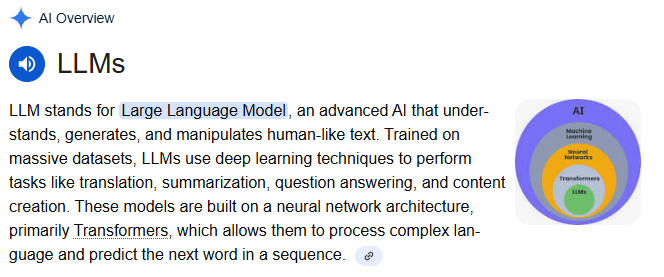
Writing content for 2026 and beyond means thinking about two audiences: humans and machines (LLMs). The reader still matters most, but LLMs need structure, transparency, and context to understand and reuse your content correctly.
Here’s how to adapt your content strategy for LLM optimisation:
- Structure for Conversation: LLMs interpret headings like “What Is,” “How To,” and “Why Does” as direct answers to user queries. Build your content with these in mind to match conversational prompts.
- Build Around Entities, Not Keywords: Group your pages by topic rather than search volume. For example, “SEO Reporting” might include subtopics like LLM Visibility Tracking, Data Attribution, and E-E-A-T Metrics. This approach strengthens semantic understanding and helps LLMs map your expertise.
- Keep Content Fresh: Generative systems prefer recent, timestamped content. Regularly updating articles, adding new statistics, or adjusting terminology (e.g., from “best seafood restaurants 2024” to “best seafood restaurants 2026”) signals reliability.
- Add Contextual Metadata: Apply schema markup such as Article, FAQPage, and Author on every blog. These data layers help LLMs interpret meaning and attribute insights correctly.
- Format for Clarity: Use bullet points, numbered steps, and well-labelled visuals. AI models interpret lists and definitions more accurately than paragraphs of mixed ideas. Content creation is still vital for SEO;, we just need to structure content more directly going forward in a less conversational way.
In short, the best-performing content in an AI-first search environment is transparent, contextual, enriched and continuously maintained. Read: “Creating LLM-Friendly Content Formats” for a more in-depth discussion.
The Role of Brand and Structured Data in LLM Visibility
Your brand’s online footprint is now one of the most influential ranking factors in the era of AI-driven search. Large Language Models interpret trust through patterns, or the frequency, accuracy, and consistency of your brand’s information across the web. We call this a Knowledge-graph, an intangible but very real collection of data about your brand, services, information, expertise or product(s).
A few key considerations on how to build your knowledge-graph for LLM citations:
- Consistency Is the New Currency: Ensure your brand name, service descriptions, and tone remain uniform across every channel, from your website to directory listings, press mentions, and social media. This builds a clearer brand entity graph that LLMs can confidently reference.
- Structured Data Builds Authority: Schema markup links your brand to products, services, and authors in a machine-readable way. Interlinking Product, Organisation, and Article schema helps models like Gemini and ChatGPT confirm the accuracy of your content.
- Off-Page Trust Still Matters: LLMs often reference sources already associated with strong trust signals, such as government sites, news outlets, or even review platforms. Earning high-quality mentions and backlinks from these sources remains a foundational part of modern and historic SEO.
- Author and Organisation Schema: Include verified author profiles that link to real-world credentials such as LinkedIn, company bios, or professional accreditations. This helps search engines and LLMs quickly validate that the insights on your page are written by a real, qualified person rather than an unverified source.
Connect your Author schema to your Organisation schema using @id references or shared identifiers. This establishes a clear data relationship that shows who made the claim, which entity they represent, and what product or service it relates to.
In practice, this creates a structured flow of information:
Claim to Author to Organisation to Product/Service.
That path gives AI models a trustworthy attribution chain, which improves your chances of being referenced in AI Overviews, generative snippets, and LLM citations.
In the LLM ecosystem, your structured data acts as your digital signature. The clearer your structured data is, the more likely your brand will appear in AI-driven answers.
The Wildcat Digital Playbook for LLM SEO Success

At Wildcat Digital, we’ve developed a practical framework for earning visibility in generative search. These are the strategies and recommendations that we make to our clients (and later implement) that form the foundation of our Generative Engine Optimisation (GEO) approach:
Audit and Structure
- Validate schema markup across your key pages using Schema.org and Google’s Rich Results Test.
- Ensure entities (brand, service, product, location) are consistently named and linked.
- Optimise author pages with expertise details and outbound credibility links.
Content and Optimisation
- Write factual, well-structured content with headings that answer natural language queries.
- Refresh high-performing content quarterly to maintain recency signals.
- Use FAQs and step-by-step sections to target conversational intent.
Measurement and Reporting
- Conduct regular LLM visibility checks across ChatGPT, Gemini, and Copilot.
- Track branded search growth and new referrals from AI browsers.
- Record LLM citations and screenshots for client reports, or report through tools included with the higher tiers of subscriptions for SEMRush, AWR and SEO Monitor.
By integrating these steps into your campaign, you’ll future-proof your SEO strategy against shifting search technologies and maintain visibility across both traditional SEO and AI-led GEO discovery and citation.
The Future of SEO in an LLM-Driven World with Wildcat Digital
The rise of LLMs represents the biggest shift in search since the introduction of Google itself. In the next two to three years, SEO will move toward a hybrid model that blends technical optimisation with semantic authority.
A few predictions for SEO and Digital Marketing in the near future:
- Generative Engine Optimisation (GEO) will become a core SEO discipline, alongside content-focused, technical-focused, or PR-focused campaigns. GEO will focus on helping brands appear as trusted citations within AI-generated results.
- Attribution frameworks will evolve, allowing marketers to track and report LLM citations with more accuracy.
- Data-led trust signals, such as structured evidence, source verification, and authorship schema, will replace (or sit alongside) traditional ranking factors like keyword density or backlink volume.
- Brand identity will drive visibility. Recognised, verifiable brands will have more influence over AI-generated responses than anonymous or unstructured sources.
The challenge ahead is about integrating our campaigns with AI. At Wildcat Digital, we’re already working with businesses to align their content and data with the next generation of search, helping them thrive in a world where visibility is earned through relevance, authority, and trust.
If you would like to see your brand, product(s) or services appearing in AI or LLM results, then contact Wildcat Digital today. We work with many businesses across all industries across the world, helping them to punch above their weight online.
If you would like to know more about our SEO, GEO, PPC, Paid Social, or Digital PR services, then get in touch with our team today for a free proposal.

Jon Herdman
SEO Executive