
Knowing that your business is delivering the right services and support is key to a long-lasting relationship with your customers. Online reviews are just one way for you to understand this relationship, but they are often overlooked when it comes to SEO ranking factors. While reviews aren’t a traditional, direct ranking factor for organic results, they do influence and shape how Google sees your business. So, how important are reviews for SEO?
Reviews are important for SEO in a number of ways. They play a huge part in influencing:
- How visible your business is in the map pack
- How Google perceives your trustworthiness
- How users chose your business over a competitor
In other words, reviews can be the missing SEO ranking factor your business needs, as very few businesses treat them with the same importance as keywords or backlinks.
High-quality reviews are also vital to local SEO, whilst additionally attracting and retaining customers.
Read on to find out more about the link between reviews and SEO, with some tips on how to make your website stand out.
What Do We Mean By A ‘Review’?
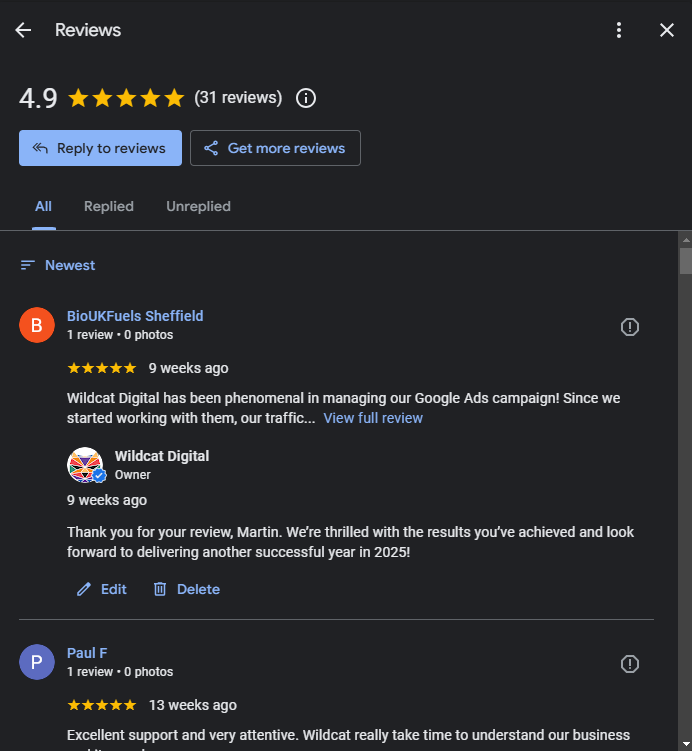
Put simply, a review is a comment added to your website by a customer, explaining their experience with your business. Customers may also recommend your products in their reviews, or even name helpful staff they interacted with. Reviews provide a space for both positive and negative feedback, and have a huge influence on your reputation, which Google pays attention to.
Google, Facebook, and Yelp are some of the most popular sites for customer reviews. If your industry is more specific, you might want to monitor other sites too. For example, TripAdvisor would be important for your business if you offer holiday accommodation.
What Is The Link Between Reviews And SEO?
For most businesses, reviews should be a focus to increase your experience, expertise, authoritativeness, and trustworthiness (E-E-A-T). Reviews themselves are not a ranking factor for overall SEO, but positive ratings will add to your trustworthiness, especially in local searches.
On a larger scale, reviews are important because they reinforce your E-E-A-T and encourage potential customers to choose you over your competitor. High average ratings, visible review snippets and thoughtful owner responses increase trust at a glance. The more potential customers trust you, the more likely they are to click through your website and convert.

Reviews And LLMs
Large language models (LLMs) such as ChatGPT or Gemini are becoming an increasingly popular tool when it comes to searching online. Instead of going straight to Google, users are now using LLMs to gain answers to their questions. Although having reviews is not essential when it comes to showing up in LLMs, it could set you above the competition. Take the image below, for example:

The image is a screenshot from a ChatGPT query regarding SEO agencies. The top information it shows is the name of the business, the review average, what the business is, and if they are currently open or closed. Without a strong review presence, LLMs would not be able to pull through the relevant information, and customers may not choose your business over others, as the trust signal is not there.
Reviews And E-E-A-T
E-E-A-T (Experience, Expertise, Authoritativeness and Trustworthiness) is a set of guidelines that help Google determine content quality on your website. It also indicates your site’s trustworthiness and the authority you hold in your industry. Even more weight is placed on these four aspects if your business falls under the ‘Your Money, Your Life’ niche.
By linking to positive reviews on popular sites, you’re showing your potential customers that you have provided good services and products in the past. The public doesn’t always trust the positives highlighted by your company, as it’s often used as a sales technique. We all know from experience, however, that real-life testimonies from others can make a difference in our decision to purchase.
Find out more about E-E-A-T in our helpful blog “How Do You Write E-E-A-T Content?”
User Generated Content
Reviews are a form of user-generated content that you may not have considered. When a customer leaves your business a review, they will (usually unintentionally) use keywords to describe problems they ran into, their experience, and the services or products you offer. This style of language can mimic the long-tail queries that genuine people are searching for when looking for things your business might offer, meaning your page is more likely to show up more often for relevant terms.
Negative Reviews
Every business aims to have a plethora of positive reviews they can show off to a potential customer, but you also need to understand how to deal with negative reviews in a way that can also benefit you.
These reviews may be the last chance you have to win that customer over and encourage them to spend their money with you in the future. According to Moz, it’s 25 times more expensive to earn new customers than to retain existing ones, so you need to have a plan when a negative review finally comes your way.
Responding to this negative feedback is key to maintaining E-E-A-T. If your customers can see where problems have arisen and how your company has fought to make things right, you’ll often become more trustworthy and experienced in their eyes. Here are just a few ways you can respond to negative reviews:
- Offer to fix the problem mentioned by the customer.
- Apologise for the customer’s bad experience.
- Accept complete responsibility for the customer’s problem.
- Write a custom response rather than using an automated one.
- Respond to the negative review within two days – the quicker, the better!
Responding to both positive and negative reviews is important to building a good relationship with your customers and building the trustworthiness of your business.

Reviews And Local SEO
Not only can positive reviews benefit your online presence overall by contributing to the credibility of your Google Business Profile (GBP), but they’re also an important part of your company’s local reputation. Quality, volume and recency of a review all help Google understand whether real people rate your business highly. Google reviews influence rankings in local map packs, so the higher your rating, the better.
If a priority for your business is ranking highly in local searches, you should think about optimising your GBP.
What Is A Map Pack?
Map packs are the local business listings that appear on Google when users make location-based searches. Google reviews directly impact your position here, so they’re a key factor in local SEO.
Securing a place in the map pack, with businesses usually grouped into sets of three, significantly increases your business’s visibility and could mean you attract more customers.
How Do I Appear In Local Rankings?
Local SEO ranking is influenced by a number of factors:
- Proximity of your business to the user.
- The completeness and accuracy of your Google Business Profile.
- The quality and quantity of Google reviews.
Businesses with a greater number of positive reviews indicate trustworthiness and customer satisfaction. Responding to both positive and negative reviews will also increase your local ranking, and shows Google that you are customer-focused and engaged.

The Review Acquisition Playbook
Most brands and businesses know that reviews matter, but few have a strong repeatable system they can rely on to successfully gain more reviews. Building a simple, scalable playbook that is easy to follow and can be rolled out across teams and locations can make it easier for customers to leave reviews.
1. Choose Your Review Request Channels
You should take a look at how your customers interact with you the most and where they may engage if you request a review. For example, do they primarily use email, or do they use SMS, too?
Make sure to keep your request short and easy to complete on mobile, as most users will complete your request on that device.
2. Equip Your Team With Ready-to-Send Templates
If your team has access to a ready-to-send template, they’ll be more likely to hit that send button, and it will take less of their time, too!
Email Template
Keep your email template simple and easy to follow, such as the ones below.
Post-purchase email to be sent 24-28 hours after purchase:
Subject: How did we do?
Body of email:
Hi {First name of customer},
Thanks for choosing {brand name}. If you’ve got a spare minute, we’d love it if you could share your experience with us. Your feedback helps others find us and helps us to constantly improve our services.
You can leave a quick view by following this link: {short review link}
Thank you. It really means a lot to us.
{sign off, e.g sender name and role}
Service completion email to be sent the same day:
Subject: Quick favour?
Body of email:
Hi {first name of customer},
It was great working with you today. If you have a spare two seconds, and you think we earned it, we’d love it if you could leave us a short review.
You can leave your review by following this link: {short review link}
We read every comment and pass them on to our team.
Thank you, {email sign off, e.g sender name and role}
SMS Script
Keep a text message script below 160 characters:
- Thanks for choosing {brand name}! Would you mind sharing a quick review? It takes 30 seconds and helps others find us: {short review link}
- We loved working with you today, {first name of customer}. Think we did a good job? Let us know here: {short review link}
GBP Review Prompt Examples
A GBP prompt is something you can add to your follow-up messages that nudge customers to leave specific, helpful reviews that will help others. This is better for both users and search engines.
Prompts you could use:
- What did you book and how did it go?
- Was there a team member who stood out to you?
- Did we assist you today?
- What result did we help you achieve?
3. Make It Simple
Customers don’t want to spend precious minutes logging in and reading text upon text just to leave a review. Make your request simple, with a branded, easy-to-click link or QR code that takes them straight to your GBP “write a review” screen.
4. Respond To All Reviews
You might not want to address a negative review for fear of highlighting it to other users. However, leaving a negative review unanswered looks worse than typing out a response – even if it is simply to apologise.
Make sure to respond to every review within 2 working days and thank customers by name. You should also reference specific parts of their review so they know you have taken the time to read it and not pressed copy and paste. Thoughtful owner responses to reviews – whether positive or negative – demonstrate care to both users and Google, improving your brand’s image.
Review Snippets And Structured Data
A review snippet is a short excerpt of a review from a review website, such as GBP or Trustpilot. It typically uses an average of the combined rating scores from the reviews that have been left. In terms of Google, if the search engine finds valid reviews or rating markup, it may show it as a rich snippet. This rich snippet could include a star rating and other summary information. Below is an example of a review snippet.
Structured data is how information is provided to Google about a page and its classifying page content. Think of it as Google’s language.
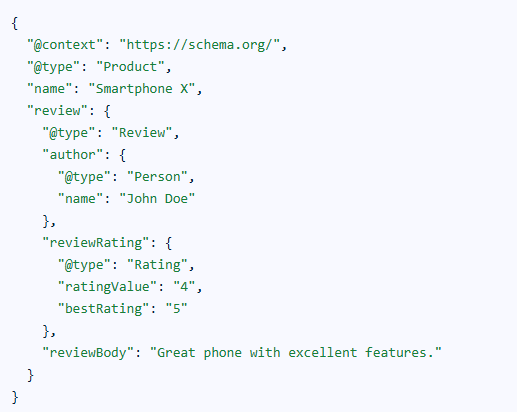
In reviews, the schema markup used is JSON-LD. This will provide structured data about an item and its review. An example of basic review schema markup would include:
- The item’s name
- The author of the review
- The review body
- The rating of the review
For example:
Take On Reviews With Wildcat Digital
Opening your business up to feedback, whether it’s positive or negative, can be intimidating to do alone. Our SEO experts are here to guide you through every step of your campaign, including improving your E-E-A-T and local rankings.
Get in touch today for a free consultation and let us guide your business into punching above its weight online.

Amy Varley
SEO Executive