
As the Google algorithm increases in complexity and technological advances such as AI become more prevalent, it can be difficult to know how to stand out in the SERPs. Fortunately, we’ve laid out all the key techniques you can use to take your website’s authority to the next level! So, what are the key SEO trust signals to consider when optimising your website?
To help your website stand out amongst tough competition, make sure you consider the following trust signals that can help boost your organic rankings:
- E-E-A-T (Experience, Expertise, Authoritativeness, and Trustworthiness)
- YMYL (Your Money Your Life)
- Positive Reviews
- Blog Author Pages
- External Signals
- Fact-checking and Citations
Keep reading to learn more about trust signals in SEO and how to improve E-E-A-T for your website.
Jump To:
- E-E-A-T in SEO: Why Experience, Expertise, Authority and Trust Still Matter
- YMYL: Why Your Money, Your Life Websites Stand Out
- The Importance of Positive Customer Reviews
- Author Pages to Help Boost Trust
- External Signals that Drive Authority
- Are Fact Checking and Citations Important Aspects of Building Trust?
- How Can First-Hand Experience Help to Build Authority?
- Additional Trust Factors to Consider
- The Wildcat Playbook for Achieving E-E-A-T Success
- What Is the Future Outlook for E-E-A-T and Trust Signals?
What Are the Key Authority Signals for SEO?
In SEO, it can be tempting to focus exclusively on optimising content, including relevant keywords, and creating original blog content. While these are all valuable techniques, it is important to diversify your SEO campaign and consider a wide range of signals that Google uses to rank websites. Trust signals are key factors that can significantly influence your organic performance. Below are some of the top trust signals to consider when reviewing your website.
E-E-A-T in SEO: Why Experience, Expertise, Authority and Trust Still Matter
E-E-A-T (Experience, Expertise, Authority, and Trust) is a key Google ranking factor, introduced in 2018 within the Search Quality Rater guidelines. Google evaluates websites and their content, including the creators of that content, using the E-E-A-T framework. There are a number of ways in which websites can demonstrate strong E-E-A-T, such as:
- Author bios – Including a small profile for the author of a blog shows Google and other users that the content was written by a real person.
- Including relevant sources – Adding external links to authoritative sources in your content shows a connection between a recognised expert in your industry and your own website.
- Implementing structured data – Particularly important in the era of AI, structured data provides further information to search engines regarding key business and service information.
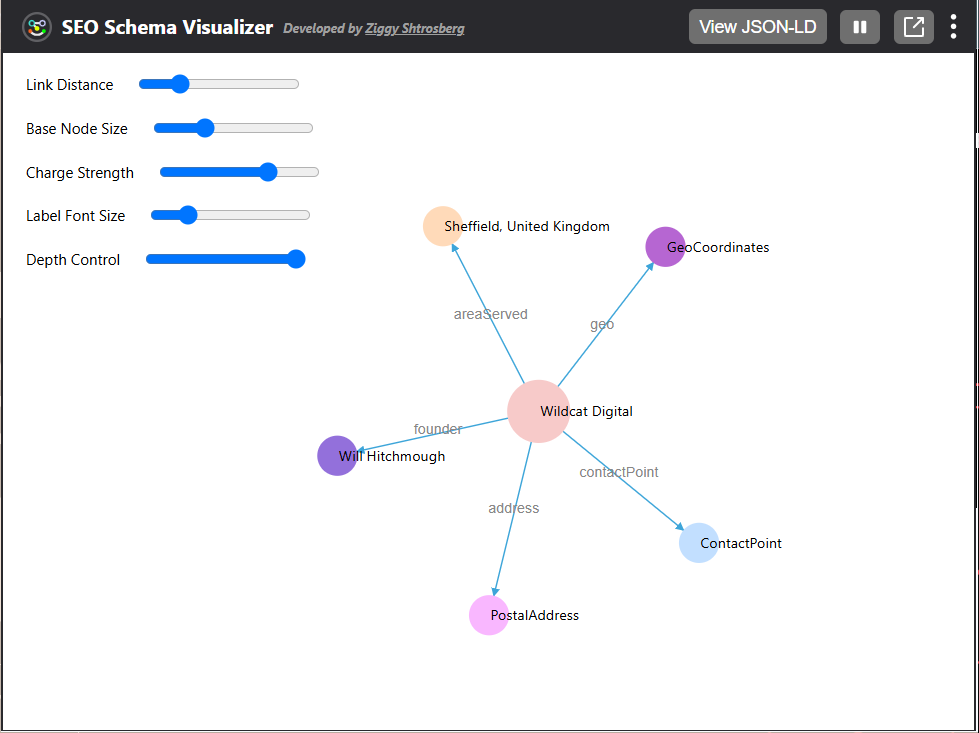
This image represents the knowledge graph that search engines can establish for a website using structured data.
Successfully implementing E-E-A-T improvements for your website is more important now than ever before due to the influence of Google’s ‘AI Overviews’. To ensure you stand out in SERPs and achieve these key organic rankings, make sure to implement the techniques described above into your SEO strategy.
From our own work on improving E-E-A-T, working with clients to develop their case studies helps to position them as reliable service-providers with relevant experience. With a combination of a robust content strategy and case study development, we were able to boost Jarvale’s inbound pipeline for valuable leads.
Read more about our SEO campaign strategy for Jarvale by reading the dedicated case study.
YMYL: Why Your Money, Your Life Websites Stand Out
YMYL (Your Money, Your Life) is a term used by Google to define industries that impact a person’s health, safety, happiness, or financial stability. Websites that fall in a YMYL niche are recognised by Google as having the potential to cause harm, and so are considered extremely seriously when ranking. For example, a website offering incorrect information regarding dietary advice could have a detrimental impact on users, and so would be treated less favourably in the SERPs. Other examples of YMYL niches include websites offering information on:
- The law
- Health & safety
- Education
- Housing
- Careers
Learn more about the importance of YMYL for SEO trust signals by reading our detailed blog here.
The Importance of Positive Customer Reviews
When you are browsing for a product or service online, how often are you checking customer reviews? Do you think you would be more inclined to give your money to a business that can evidence positive previous interactions with customers? To ensure your users trust the quality of the service you are offering, it is vital that you offer verified reviews on your website that clearly show you are capable of successfully providing the product or service that you are offering. Particularly important for local SEO campaigns, reviews increase the likelihood that users will convert. Consider adding a suitable plugin to your website that can connect to your Google Business Profile or Trustpilot reviews.

Learn more about the impact of reviews by reading our comprehensive article here.
Author Pages to Help Boost Trust
As the rise in AI-generated content dominates search results, it is vital to show proof that your content was written by a human being. One way to do this is to include a small author bio for your blogs, providing more information on the person who wrote the article. To develop trustworthy author profiles for your blogs, be sure to include:
- Any relevant experience
- Notable achievements
- A small personal bio
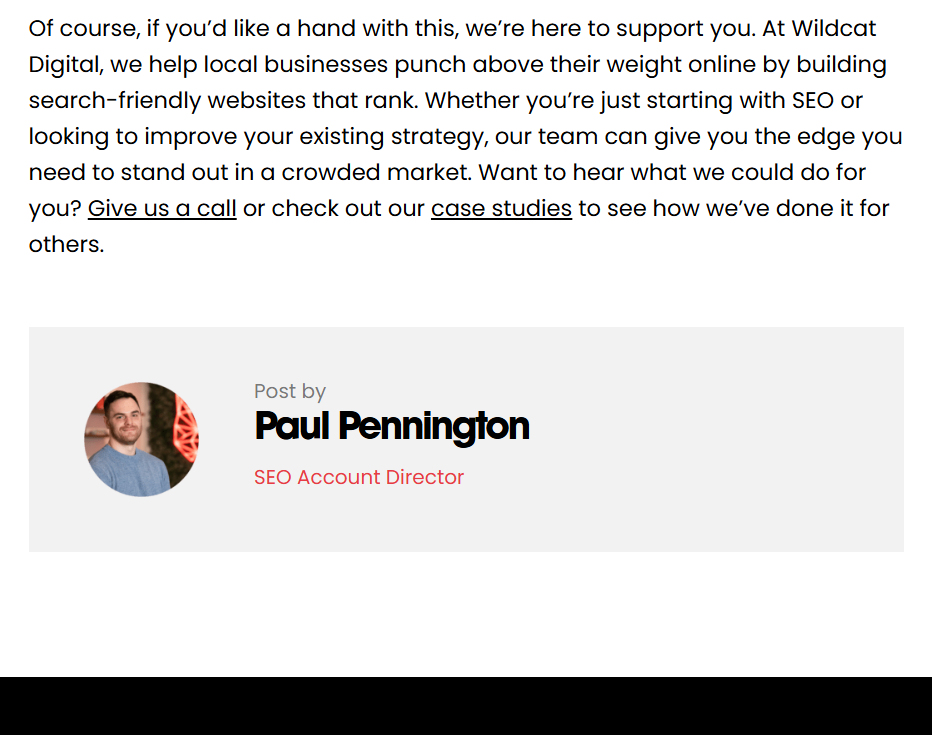
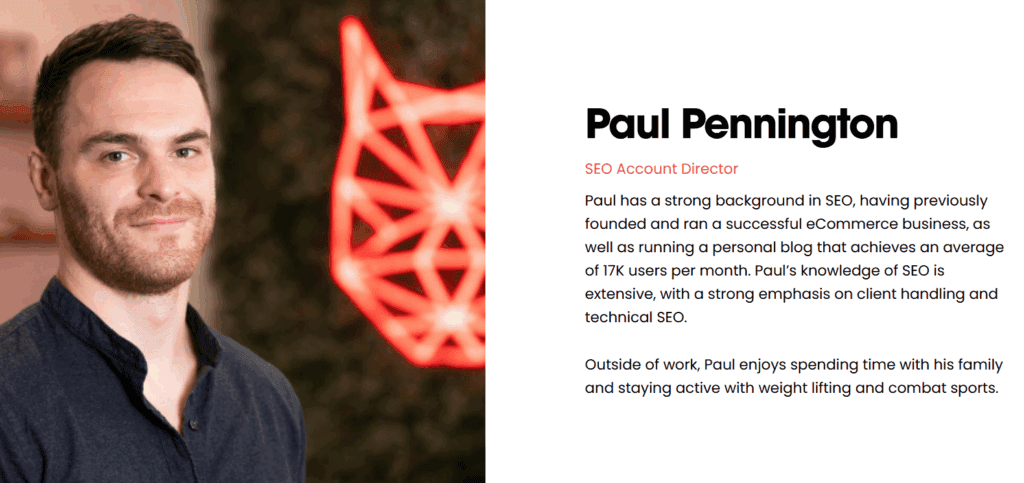
Read more on the importance of well-developed author pages by reading our detailed article here.
External Signals that Drive Authority
Once you’ve optimised content on your own website, it’s time to consider methods for developing authority off-page. One of the most effective ways to build your authority is through the use of backlinks. By achieving good quality backlinks from authoritative sources, Google will recognise your own website as a trustworthy and legitimate source of information. To achieve quality backlinks, many companies participate in digital PR (Public Relations).
Digital PR
Digital PR typically involves reaching out to media publications with original content for them to release and provide a backlink, helping to develop brand visibility and credibility for both search engines and other users.
Social Proof
Your business becomes validated by the public through the use of reviews, testimonials, user-generated content and social media engagement. All of these signals help to boost your website’s authority and increase your rankings with improved engagement.
Third-Party Mentions
Third-party mentions, such as comments, blog mentions, or social media posts, are all significant for building authority. They cultivate trust and convey value to both users and search engines, even in the absence of direct links. Furthermore, mentions on external platforms such as Amazon or Trustpilot enhance credibility and reinforce your brand’s digital footprint.
Learn more about some of the best techniques for building external authority signals by reading our detailed blog here.
Are Fact Checking and Citations Important Aspects of Building Trust?
In SEO, gaining authority essentially means becoming a recognised source of reliable information. You can earn authority by being truthful and accurate. By providing citations for any sources you use, linking to original studies and correcting any errors you might find in your content, trust signals will be sent to Google – and other users – that your website is a reliable source of information.
Learn more about the importance of fact-checking and citations by reading our detailed blog here.
How Can First-Hand Experience Help to Build Authority?
As indicated in the first ‘E’ of E-E-A-T, experience is vital for developing your website’s authority. Showcase real-world examples of times where your business has demonstrated its ability to help your customers. Position yourself as a brand with extensive topical authority using firsthand experiences. A fantastic way to do this is by using case studies. Case studies are the perfect opportunity to showcase specific instances where firsthand experience has resulted in a favourable outcome for a client.
Learn more about the value of firsthand experience for building trust by reading our comprehensive guide here.
Additional Trust Factors to Consider
Some other aspects to consider during your optimisation efforts include:
- Adding a well-developed ‘About Us’ page or similar – This page should include a well-written narrative providing a background for the formation of your business and what sets you apart from others.
- Clear contact info – Ensure it is as easy as possible for a user to get in touch and for Google to connect your contact details to your business by providing clear, concise contact information.
- Building technical trust – Ensure your website is protected with HTTPS, UX (User Experience) is optimised where possible, and core web vitals are healthy.
- Content freshness and updates – Regularly update your content to ensure Google recognises that you are staying up-to-date and not letting your content become stale.
The Wildcat Playbook for Achieving E-E-A-T Success
When we start working with any new business, we conduct a comprehensive E-E-A-T audit of their website. During this audit, we review more than 30 unique factors that influence authority signals for our client’s websites, and add each of the subsequent actions to the SEO campaign plan. Some of the typical actions that follow our E-E-A-T audit include:
- Implementing new policies, including cookie management
- Optimising/creating ‘about us’ and ‘meet the team’ pages
- Adding author bios to blog articles
- Integrating reviews from verified sources into landing pages
- Conducting a backlink audit to address spam/suspicious backlinks
Learn more about our checklist for achieving E-E-A-T success by reading our comprehensive guide here.
What Is the Future Outlook for E-E-A-T and Trust Signals?
So, will E-E-A-T continue to affect rankings in 2026? In short: yes! E-E-A-T is the primary method Google uses to assess credibility and authority, and will remain in place for the foreseeable future. As the impact of AI becomes more prevalent in the modern day, it is vital to review your website’s trust signals and take steps to improve your authority. Without seriously considering how you can improve your topical authority, it is likely you will fall behind the competition. E-E-A-T is a crucial Google ranking factor, especially with the rise of AI-generated content, and can be demonstrated by creating author bios, citing relevant sources, and including structured data.
In Summary:
- YMYL (Your Money, Your Life) websites, which impact a person’s health, safety, happiness, or financial stability, are treated with extreme seriousness by Google when ranking due to their potential to cause harm.
- Positive customer reviews are vital for building trust and increasing conversions, particularly for local SEO campaigns, as they provide verified evidence of successful interactions.
- Building authority off-page through external signals like backlinks from authoritative sources (often achieved through digital PR), social proof (reviews, testimonials, social media engagement), and third-party mentions (comments, blog mentions, social media posts) are also critical for SEO success.
- As 2026 approaches, it is clear that E-E-A-T will remain a key aspect of building authority in Google as AI overviews and other AI visibility become more essential.
Develop Your Website’s Trust Signals with Wildcat Digital
Kick-start your journey towards becoming an authoritative, trustworthy source of information to help your website stand out in the SERPs by working with a team of SEO professionals. We will work with you to deliver a campaign strategy tailored to meet your unique requirements. Get in touch with the team at Wildcat today for a free consultation.

Andy Blanchard
Senior SEO Executive